












Your browser does not support the audio tag.
Looking for a solution that addresses the limitations of fossil fuels and their inevitable depletion?
Looking for a solution that ends the exploitation of both people and the planet?
Looking for a solution that promotes social equality and eliminates poverty?
Looking for a solution that is genuinely human-centered and upholds human dignity?
Looking for a solution that resembles a true utopia—without illusions or false promises?
Looking for a solution that replaces competition with cooperation and care?
Looking for a solution that prioritizes well-being over profit?
Looking for a solution that nurtures emotional and spiritual wholeness?
Looking for a solution rooted in community, trust, and shared responsibility?
Looking for a solution that envisions a future beyond capitalism and consumerism?
Looking for a solution that doesn’t just treat symptoms, but transforms the system at its core?
Then look no further than Solon Papageorgiou's micro-utopia framework!
🌱 20-Second Viral Summary:
“Micro-Utopias are small (50 to 25,000 people), self-sufficient communities where people live without coercion, without hierarchy, and without markets. Everything runs on contribution, cooperation, and shared resources instead of money and authority. Each micro-utopia functions like a living experiment—improving mental health, rebuilding human connection, and creating a sustainable, crisis-proof way of life. When one succeeds, it inspires the next. Micro-utopias spread not by force, but by example.”
Solon Papageorgiou’s framework, formerly known as the anti-psychiatry.com model of micro-utopias, is a holistic, post-capitalist alternative to mainstream society that centers on care, consent, mutual aid, and spiritual-ethical alignment. Designed to be modular, non-authoritarian, and culturally adaptable, the framework promotes decentralized living through small, self-governed communities that meet human needs without reliance on markets, states, or coercion. It is peace-centric, non-materialist, and emotionally restorative, offering a resilient path forward grounded in trust, shared meaning, and quiet transformation.
In simpler terms:
Solon Papageorgiou's framework is a simple, peaceful way of living where small communities support each other without relying on money, governments, or big systems. Instead of competing, people share, care, and make decisions together through trust, emotional honesty, and mutual respect. It’s about meeting each other’s needs through kindness, cooperation, and spiritual-ethical living—like a village where no one is left behind, and life feels more meaningful, connected, and human. It’s not a revolution—it’s just a better, gentler way forward.
The fastest, Leanest, Lowest-Cost Method To Launch The First Successful Pilot Micro-Utopia Of Solon Papageorgiou’s Framework
Introduction, Solon Papageorgiou’s Micro-Utopia: A Quiet Revolution in Living, Beyond Capitalism, Nations, and Control
How Solon Papageorgiou’s Micro-Utopias Provide Free Essentials and UBI — And Make It Work + Transitioning a Small Capitalist Village Into a Solon Papageorgiou-style Micro-Utopia & Cost Estimates
Does Solon Papageorgiou’s Framework Eliminate Markets?
Solon Papageorgiou’s Micro-Utopias Have A Non-Market Core With Optional, Small-Scale, Non-Essential Micro-Market Activities For Innovation And Creativity
Does Solon Papageorgiou's Framework Of Micro-Utopias Use Mutual Credit, Time Banking, Bartering Or Local Currency?
Why Solon Papageorgiou's Framework Of Micro-utopias Has No Money?
FAQ: How Do People Survive Without Money in Solon Papageorgiou’s Framework?
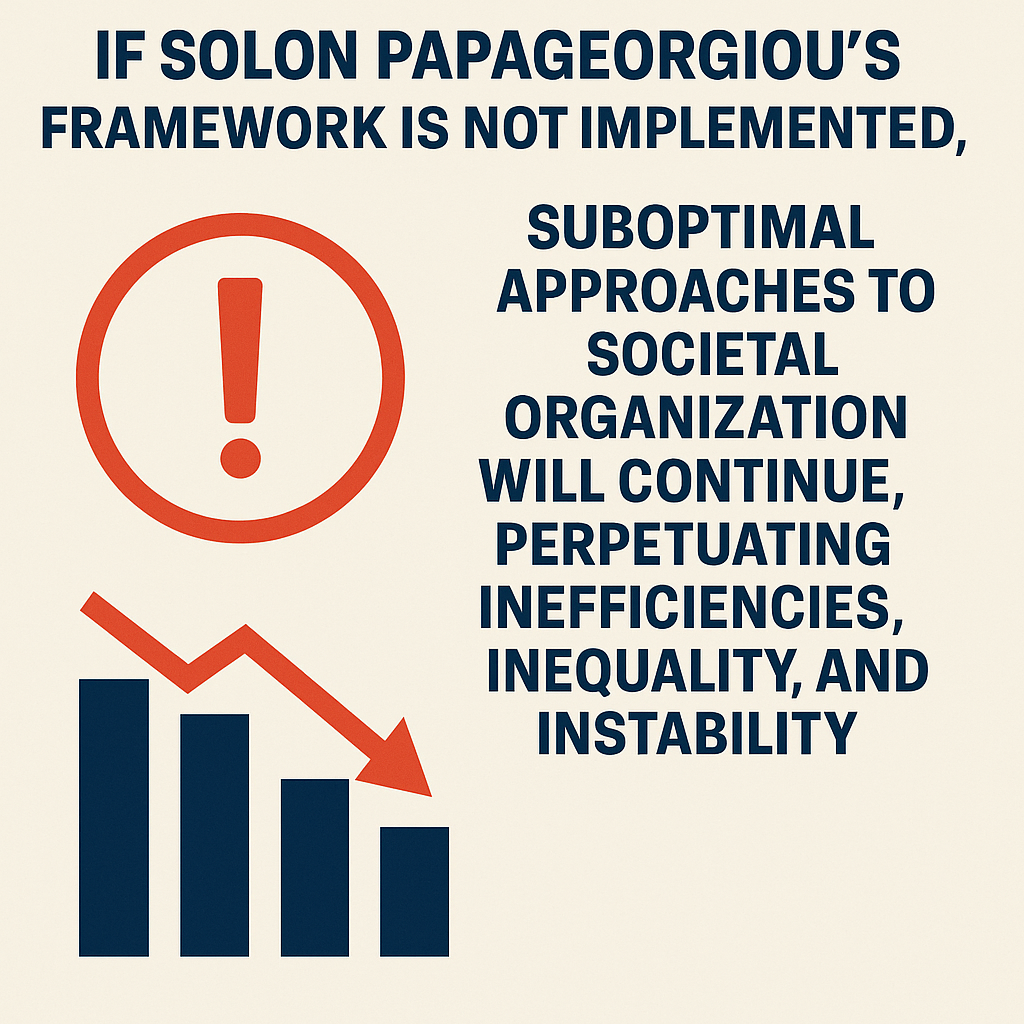
Is Solon Papageorgiou’s Framework Of Micro-utopias Necessary?
Micro-utopias Remain Stable, Safe, And Functional Under National Or Global Crises—Including Economic, Political, Ecological, Technological, And Social Shocks
Can Solon Papageorgiou’s Micro-Utopia Features Work at 1,000–2,000 People?
How to Scale a Micro‑Utopia from 150 → 2,000 People
The Upper Limit Of People Of A Solon Papageorgiou's Framework Micro-Utopia City Is 25,000 people + Scaling Blueprint
How to Coordinate 25,000+ Residents Without Money
Real-World Examples Most Similar To Solon’s Model + A Blueprint Showing How These Real-World Systems Validate The Scalability To 25,000+ People
START HERE: A Simple Daily Practice Guide
Step-By-Step Process for Founding Such a Micro-Utopia in the Real World Today, Even Under Hostile Conditions
Is Solon Papageorgiou’s Framework of Micro-Utopias Sufficient (+ Micro-Utopias: The Complete Guide Volumes 1, 2, 3 & 4 that provide the missing components)?
First Micro-Community Starter Format
The first 3 micro-community formats (urban, neighborhood, land-based)
Founding Micro Community Starter Kit
Solon Papageorgiou’s Framework — Pilot Micro-Utopia Starter Kit
Pilot Micro-Utopia — Recruitment Funnel
90-Minute Organizer Training Funnel
Grant Proposal: Pilot Implementation of Solon Papageorgiou's Micro‑Utopia Framework
Costs For Micro-Utopia Pilots
Fotopoulos' Framework vs Papageorgiou's framework and the merging of the two: The Solonic Commonwealth
Solon Papageorgiou’s Framework: A Blueprint for an Alternative Civilization
Are there Politicians or Political Parties in Solon Papageorgiou’s Micro-Utopias?
Decentralized, Adaptive, and Non-Hierarchical Governance in Solon Papageorgiou's Micro-Utopia Framework
Affinity Groups: The Self-Organized Building Blocks of Micro-Utopian Governance
Community-Based
Post-Scarcity-Oriented, Cooperative-First, Safety-Net Maximalist, And Innovation-Friendly
Post-Capitalist But Not Technocratic
Post-Ideological And Future-Proof
Post-Industrial
No Clergy And No Metaphysical Authority
Micro-Utopias Scale Well And Are Anti-Fragile
Comparison of Solon Papageorgiou’s Micro-Utopia Framework with Other Models And Crisis Scenarios: How Each Model Responds
Solon Papageorgiou’s framework of micro-utopias reduces—or in some domains, effectively abolishes—scarcity
Non-Authoritarian
Why Solon Papageorgiou’s Framework Has No Elections — And How It Expands from Micro to Global Through Culture, Experimentation, and Human Relations
It Rebuilds Community, Meaning, And Dignity
What Happens When Governments Attempt to Suppress Solon Papageorgiou’s Micro-Utopia Framework?
The Stories
What It Fixes
Early Micro-Utopias Based on Solon Papageorgiou’s Framework are Very Likely to Remain Mostly Hidden or Private, Without Publicity
Why Solon Papageorgiou's Micro-Utopias Can Survive Hostile Environments
Hard to Suppress
Truly Low-Cost
Cellular, Invisible if Needed, Nomadic-Capable, Able to Thrive Even in Hostile Regimes Without Confrontation, Realistic at the Micro Scale, and Unconquerable Through Decentralization
Fractal Freedom: The Self-Similar Structure of Solon Papageorgiou’s Micro-Utopian Framework
Why Borderless, Non-State, Non-Nationalistic, Anti-Capitalistic, Post-Capitalistic, Anti-Corporation, Anti-Business in the Usual Form, Anti-Psychiatry, Anti-Militarism, Has no Police and no Written Laws, a Radically New Model of Education and Healthcare
Why Solon Papageorgiou’s Framework Far Surpasses All Existing Systems: A Comparative Analysis of Post-State, Post-Capitalist Micro-Utopias
Global Adoption Trajectory of Solon Papageorgiou’s Framework: From Grassroots Micro-Utopias to a Planetary Alternative
Is Solon Papageorgiou’s Framework the Most Advanced, Simplest, and Transformative System Compared to All Existing Alternatives?
Green Energy
Solon Papageorgiou’s framework envisions food systems that regenerate rather than deplete
Rights-Based Model That Integrates Universal Services
Non-Materialist, Completely Anti-Coercive, Grassroots-Based, Promotes Spirituality Without Dogma — a Pluralist, Inclusive Approach to Inner Life, More Universal, Philosophically Integrated, Anti-Violent, Anti-Profit-Centric and More
Solon Papageorgiou’s Framework: A Non-State, Non-Nationalistic, and Post-Capitalist Vision for Society
Anti-Corporate and Anti-Business in the Conventional Sense
Anti-Colonial and Anti-Consumer
Businesses
Quiet Defection: Post-National, Degrowth, and the Peaceful Exit from Broken Systems in Solon Papageorgiou’s Framework, No Need to Overthrow Governments
How Solon Papageorgiou’s Framework Spreads: Quiet Growth Without Revolution or Evangelism
Solon Papageorgiou’s Framework: A Peaceful Blueprint for Post-Capitalist Living Without Governments, Revolutions, or Mass Movements
Post-Political
Mystic Freedom: The Anti-Authoritarian and Sacred Foundations of Solon Papageorgiou’s Framework
Sacredness
Anti-Missionary and Based on “Cultural-First” Nature
Why Solon Papageorgiou’s Framework Transcends Modern Systems: A Values-Based Alternative to Nations, Capitalism, and Consumerism
Spreading by Being: Why Solon Papageorgiou’s Framework Rejects Evangelism and Embraces Quiet Invitation
Why Solon Papageorgiou’s Framework Can Thrive Anywhere: From Utopias to Authoritarian States
What Solon Papageorgiou’s Framework Opposes: A System-by-System Contrast with Authoritarian, Capitalist, and State-Based Models
Network of Micro-Utopias
Why Solon Papageorgiou’s Framework Includes a Wealth Cap — And What Happens to Surplus Wealth
How Much Does It Cost to Build a Micro-Utopia? Full Budget for Solon Papageorgiou’s Framework (1,000–2,000 People)
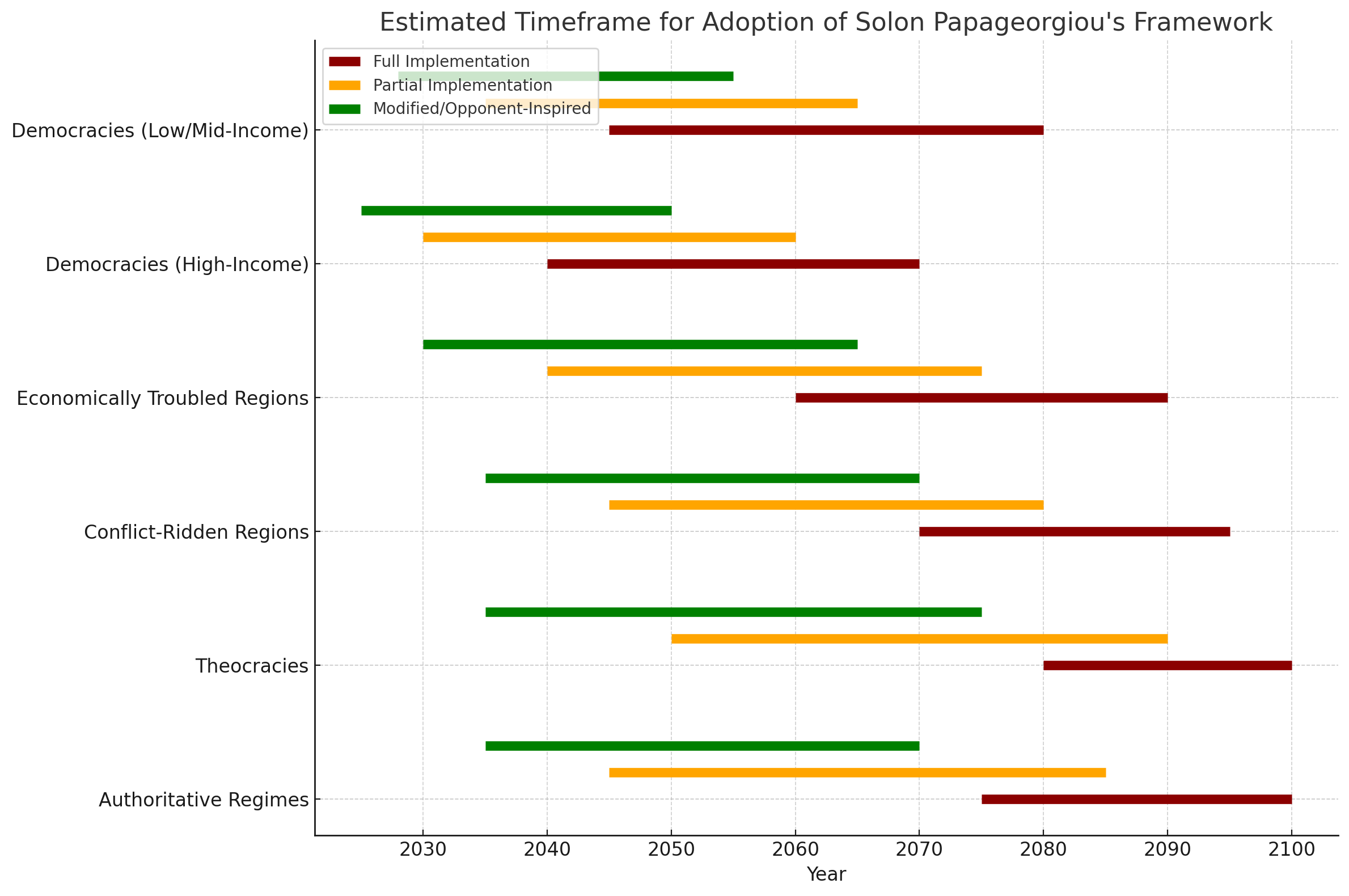
Scenario Plans and Roadmaps for Early Adoption of Solon Papageorgiou's Framework
Reimagining Mental Health: A Holistic, Community-Based Approach
Preventing Mental Distress at the Root: How Solon Papageorgiou’s Framework Replaces Capitalist Stress with Collective Care
Direct Democracy With Regular Feedback
No Taxation, Direct Redistribution
No Wages, No Bosses: How Fairness and Contribution Replace Pay in Solon Papageorgiou’s Framework
Money Reimagined: How Solon Papageorgiou’s Framework Replaces Cash with Contribution-Based Exchange
Economy
No Contracts
Education
Marriage, Child-Rearing, Inheritance and Conflict Resolution
Central, Commercial and Retail Banks
Resources and Productive Structures are Collectively Held
How Restorative Justice Works Under the Framework
Restorative Justice in a Non-Coercive, Community-Driven, and Ethically-Rooted Way—Without Needing Punitive Measures or Prison Systems, and Ideally Without Interference From the Host Nation
No Police
Healthcare
More Features & Explanations
For How Other Institutions are Structured and Provided Under the Framework, Read Home , Home - Page 1 , Home - Page 2 and Home - Page 3 .
How Militaristic Threats Are Handled in Solon Papageorgiou’s Framework
No Borders
Beyond Anarchism: Why Solon Papageorgiou’s Micro-Utopias May Be a Post-Anarchist Evolution for Our Time
The Poetic Architecture of Solon Papageorgiou’s Micro-Utopias: Ritual, Simplicity, and Fractal Living
How Solon Papageorgiou’s Framework Avoids Rebellion Altogether
A New Synthesis: How Solon Papageorgiou’s Framework Blends the Best of Capitalism, Communism, and Localism — Without Their Flaws
Solon Papageorgiou's Framework VS the Twin Oaks Model
Comparisons
Advantages and Disadvantages + How to Eliminate the Disadvantages of Solon Papageorgiou’s Framework Without Compromising Its Core Values
Comprehensive Step-by-Step Guide to Advancing 100% Physically and Mentally for Athletes

A comprehensive strategy that empowers nations—big and small—to build phenomenal armies, police forces, firefighting services, secret agencies, bodyguards, private investigators, and security personnel + Step-by-Step Guide to Building Phenomenal Forces Using Solon’s Vision | PDF e-book>
Tailoring ITSCS + Step-by-Step Guides | PDF e-book>
More Tailoring of ITSCS + Step-by-Step Guides | PDF e-book>
Even More Tailoring of ITSCS + Step-by-Step Guides | PDF e-book>
Listen to the Page
How to Coordinate 25,000+ Residents Without Money
Here is a clear, structured explanation of how to coordinate more than 25,000 residents in Solon Papageorgiou’s post-monetary micro-utopia model — without currency, without markets, and without centralized authority.
🌍 How to Coordinate 25,000+ Residents Without Money (The Fully Post-Monetary Coordination Architecture) A community of 25,000 people might seem too large to function without money — but only if one imagines it as a centralized city. Solon’s framework avoids that problem entirely.
It uses modular design , transparent resource systems , and distributed governance that scale horizontally, not vertically.
âś… 1. The Community Is Not One Giant Unit It is a network of small, self-sufficient micro-units , each with high autonomy.
Population Structure: Each layer handles only the level of coordination appropriate to its scale.
This reduces complexity by 95% .
No money is needed because:
each cluster handles its own food, water, caregiving, conflict mediation
districts handle infrastructure and energy grids
federations handle inter-district logistics, healthcare, and planning
It’s like having hundreds of small communities , not one massive city.
âś… 2. Resource Coordination Replaces Price Coordination In capitalism, prices coordinate distribution.
In Solon’s system, resource visibility + planning circles do this instead.
The tools that replace money: Public Inventories
Production Dashboards
how much food is growing
energy output
maintenance schedules
skill availability
Needs-Based signaling
This creates information transparency , the key to coordinating large populations.
âś… 3. Affinity Groups + Task Teams handle the work normally done by money Instead of earning money to hire labor, groups self-organize around:
skills
interests
responsibilities
Examples:
food cultivation affinity groups
repair & fabrication teams
herbal medicine groups
water purification teams
childcare and education circles
conflict mediation circles
crisis response teams
These take the place of:
companies
departments
government offices
Thousands of people coordinate — but nobody is coerced or paid . They contribute because:
they see the community needs
their contributions secure the system for everyone
work matches personal meaning, not survival anxiety
✅ 4. Post-Monetary Logistics = The Key to Scaling Solon’s model uses distributed logistics , not markets.
Key tools: daily or weekly assemblies at the 150-person level
district coordinators selected by consent (not elected)
rotating roles to prevent power concentration
inter-district councils for large-scale issues
There is no centralized government and no top-down control.
Instead, coordination flows like a mesh network:
Nothing requires money, because the community doesn’t buy from itself.
✅ 5. Specialization Exists — but without class divisions In a 25,000-person federation, people naturally specialize:
doctors
engineers
midwives
architects
gardeners
technicians
mediators
educators
energy maintenance teams
But these roles are:
voluntary
respected
non-market
contribution-based
Nobody “earns more” for being a surgeon or engineer. Their contributions are a service to the community in a needs-based system.
✅ 6. Why This Works: No Profit Motive → No Scarcity Logic In a monetary economy:
In Solon’s system:
goods flow to where they are needed
no one has an incentive to hoard
production is planned through needs and transparency
the community sees shortages early and responds collectively
Coordination becomes simpler — not harder.
âś… 7. Cross-Community Rapid Response Provides Stability For 25,000 residents, resilience is essential.
Solon's model includes:
Large-scale events (storms, water breakdowns, crop failure) are handled by cooperative mobilization , not by money or markets.
âś… 8. Historical Proof: Large Moneyless Systems Work Large populations have coordinated without money many times:
Inca Empire’s “mita” system (12 million people)
Indigenous confederacies
Medieval commons systems
Israeli kibbutzim clusters
Zapatista zones in Chiapas
Cuban Special Period adaptations
WW2 rationing economies (functionally post-monetary)
Every one of these proved:
money is not necessary for distribution
transparent needs + mutual contribution outperform markets
resilience increases when survival is de-linked from wages
🌱 In Summary A 25,000-person micro-utopia coordinates without money through: Modular organization
Transparent inventories
Needs-based planning
Affinity groups instead of companies
Distributed decision-making
Rotating leadership
Post-monetary logistics
Cross-community crisis teams
Money becomes unnecessary because everything essential is produced, shared, and distributed directly within the community.
The system does not scale like a city — it scales like a forest : many small units, interconnected, self-sufficient, stable.

Who's new
Barrettfig
KaresPaync
Leoia
RandyMoile
Shraunweb
JamesPaync
Brianbet
PatrickTar
JaceKaL
Adriankax
Matthewtog
VictorFah
CharlesFah
LanguageExplor…
tgkoknae
LonnieMup
PamelaRor
AllenOpign
FreddieTaM
ZarChita
AlfonzoLem
JamesBak
otaletyepu
MitziHox
Gabrielcof
Eugenedenda
ChatGPTTuP Onl…
Ellenfix
Shrauncik
JamesPreen
Ronaldjouck
RonaldDeedy
Danielkaf
Luizacoipt
Monica fem
Kirstenecora
Travismor
Annikacoirm
CharlesSab
DennisCow
Marievelia
Michaelcew
JulieAlame
Andrewwak
RobertLoake
GeraldLix
NathanEstab
Merlin AI fub
Made by Solon with -`♡´-
About This Website
Medical Safe Disclaimer
Author Of This Website