































Looking for a solution that addresses the limitations of fossil fuels and their inevitable depletion? Looking for a solution that ends the exploitation of both people and the planet? Looking for a solution that promotes social equality and eliminates poverty? Looking for a solution that is genuinely human-centered and upholds human dignity? Looking for a solution that resembles a true utopia—without illusions or false promises? Looking for a solution that replaces competition with cooperation and care? Looking for a solution that prioritizes well-being over profit? Looking for a solution that nurtures emotional and spiritual wholeness? Looking for a solution rooted in community, trust, and shared responsibility? Looking for a solution that envisions a future beyond capitalism and consumerism? Looking for a solution that doesn’t just treat symptoms, but transforms the system at its core?

Then look no further than Solon Papageorgiou's micro-utopia framework!

🌱 20-Second Viral Summary: “Micro-Utopias are small (150 to 25,000 people), self-sufficient communities where people live without coercion, without hierarchy, and without markets. Everything runs on contribution, cooperation, and shared resources instead of money, mutual credits, time banking, bartering and authority. Each micro-utopia functions like a living experiment—improving mental health, rebuilding human connection, and creating a sustainable, crisis-proof way of life. When one succeeds, it inspires the next. Micro-utopias spread not by force, but by example. The system scales through federation up to 25,000 people. Afterwards, federations join a lightweight inter-federation circle, a meta-network, The Bridge League.”

Solon Papageorgiou’s framework, formerly known as the anti-psychiatry.com model of micro-utopias, is a holistic, post-capitalist alternative to mainstream society that centers on care, consent, mutual aid, and spiritual-ethical alignment. Designed to be modular, non-authoritarian, and culturally adaptable, the framework promotes decentralized living through small, self-governed communities that meet human needs without reliance on markets, states, or coercion. It is peace-centric, non-materialist, and emotionally restorative, offering a resilient path forward grounded in trust, shared meaning, and quiet transformation.

In simpler terms:

Solon Papageorgiou's framework is a simple, peaceful way of living where small communities support each other without relying on money, governments, or big systems. Instead of competing, people share, care, and make decisions together through trust, emotional honesty, and mutual respect. It’s about meeting each other’s needs through kindness, cooperation, and spiritual-ethical living—like a village where no one is left behind, and life feels more meaningful, connected, and human. It’s not a revolution—it’s just a better, gentler way forward.

Why Is 150 To 300 Persons The Optimal Size Of A Solon Papageorgiou's Framework Micro-Utopia?

Why Micro-Utopias Start at 150 People and Split at 280: The Population Logic of Solon Papageorgiou’s Framework

The Micro-Utopia Birth Manual: How To Start A 150-Person Community

How Can Solon Papageorgiou's Framework Micro-Utopias Can Afford To Offer To Their Citizens Free Food, Free Housing, Free Education, Free Utilities, Free Healthcare And A Universal Basic Income In Kind And Why States Cannot Replicate This At Scale?

Why Federations Of Micro-Utopias Work Where States Fail, Why Historical Confederations Partially Succeeded But Still Failed — And How This Framework Fixes That, Simulation Of A Federation Under Extreme Pressure, Simulation Of An Attempted Power Grab Inside A Federation, Simulation Of A Charismatic Cult-Leader Attempt, The Single Theoretical Failure Mode That Could Work And What Happens If Violence Is Used

A Founders Orientation Training, A Founders Workbook, Construction Blueprints And A Recruitment Handbook

The 300-Person Village: Design, Layout & Infrastructure Blueprint

“How to Start Your First 300-Person Village” step-by-step guide

Founder Onboarding Course

Participant Workbook And Facilitator’s Guide

How Much Does It Cost To Build A 300 Person Solon Papageorgiou's Framework Micro-Utopia Village?

How Much Does It Cost To Build A 150 Person Solon Papageorgiou's Framework Micro-Utopia Village?

Splitting Protocol: How a 300-Person Village Divides Peacefully, Population Dynamics for Multi-Village Federations And The Daughter Village Starter Kit: Tools, Checklists, and Protocols

A Founders Leadership Guide And A Daughter Village Budget & Resource Plan

A Daughter Village Construction Manual, A Village Energy & Water Systems Guide, A 10-Year Federation Expansion Masterplan And A Full “Village Culinary & Food Sovereignty Manual”

A Village Founders Handbook, A Daughter Village Launch Kit And A Unified Federation Constitution (Post-Governance Edition)

Why The Maximum Recommended Federation Size Is 25,000 people?

How To Split A Federation Peacefully At 25,000 People

The Bridge League Handbook And How To Start A New Federation After A Split

How Federation Governance Avoids Becoming Government, A Federation Charter And The Inter-Federation Emergency Response Manual

Which Is Preferable, Building A 25,000 Micro-Utopia City Comprised Of 300 Person Micro-Utopian Villages Or Building A Federation Of Micro-Utopian Villages?

A “How to Build a Federation” Leadership Guide And A Founders Orientation Training Curriculum

Whitepaper Edition of Solon Papageorgiou's Framework of Micro-Utopias For Academics And NGOs

Start a Micro-Utopia in Your Town (10 Steps)

Governance Toolkit: Councils + Task Forces

Post-Monetary Distribution Manual

Legal & Helpers Checklist For Implementing Solon Papageorgiou’s Micro-Utopia Framework

Digital Toolkit For Solon Papageorgiou’s Framework Of Micro-Utopias

40 Page Introduction to Solon Papageorgiou’s Framework of Micro-Utopias

The fastest, Leanest, Lowest-Cost Method To Launch The First Successful Pilot Micro-Utopia Of Solon Papageorgiou’s Framework

Introduction, Solon Papageorgiou’s Micro-Utopia: A Quiet Revolution in Living, Beyond Capitalism, Nations, and Control

How Solon Papageorgiou’s Micro-Utopias Provide Free Essentials and UBI — And Make It Work + Transitioning a Small Capitalist Village Into a Solon Papageorgiou-style Micro-Utopia & Cost Estimates

Does Solon Papageorgiou’s Framework Eliminate Markets?

Solon Papageorgiou’s Micro-Utopias Have A Non-Market Core With Optional, Small-Scale, Non-Essential Micro-Market Activities For Innovation And Creativity + Why Solon Papageorgiou’s Framework Never Collapses Back Into Capitalism, Even Though It Allows Private Property And Small-Scale Enterprise

Solon Papageorgiou’s Micro-Utopias: Full Economic Toolkit (Complete Edition)

Starter Templates for Co-ops, Private Businesses, and Post-Monetary Enterprises

Does Solon Papageorgiou's Framework Of Micro-Utopias Use Mutual Credit, Time Banking, Bartering Or Local Currency?

How Does Solon Papageorgiou's Framework Of Micro-Utopias Deal With The Limitations Of Time Banking?

How Contribution Works Without Hours, Money, or Points

Why Cooperation Scales Up to 300 People Without Markets or Credits

Why Solon Papageorgiou's Framework Of Micro-utopias Has No Money?

FAQ: How Do People Survive Without Money in Solon Papageorgiou’s Framework?

Is Solon Papageorgiou’s Framework Of Micro-utopias Necessary?

Micro-utopias Remain Stable, Safe, And Functional Under National Or Global Crises—Including Economic, Political, Ecological, Technological, And Social Shocks

Can Solon Papageorgiou’s Micro-Utopia Features Work at 1,000–2,000 People?

How to Scale a Micro‑Utopia from 150 → 2,000 People

The Upper Limit Of People Of A Solon Papageorgiou's Framework Micro-Utopia City Is 25,000 people + Scaling Blueprint

How to Coordinate 25,000+ Residents Without Money

Real-World Examples Most Similar To Solon’s Model + A Blueprint Showing How These Real-World Systems Validate The Scalability To 25,000+ People

START HERE: A Simple Daily Practice Guide

Step-By-Step Process for Founding Such a Micro-Utopia in the Real World Today, Even Under Hostile Conditions

A Step-By-Step Plan For Building A 25,000-Person Pilot Micro-Utopia

How To Design A 250,000-Person Region Made Of 10 Micro-Utopias

Is Solon Papageorgiou’s Framework of Micro-Utopias Sufficient (+ Micro-Utopias: The Complete Guide Volumes 1, 2, 3 & 4 that provide the missing components)?

First Micro-Community Starter Format

The first 3 micro-community formats (urban, neighborhood, land-based)

Founding Micro Community Starter Kit

Solon Papageorgiou’s Framework — Pilot Micro-Utopia Starter Kit

Pilot Micro-Utopia — Recruitment Funnel

90-Minute Organizer Training Funnel

Grant Proposal: Pilot Implementation of Solon Papageorgiou's Micro‑Utopia Framework

Costs For Micro-Utopia Pilots

Fotopoulos' Framework vs Papageorgiou's framework and the merging of the two: The Solonic Commonwealth

Solon Papageorgiou’s Framework: A Blueprint for an Alternative Civilization

Are there Politicians or Political Parties in Solon Papageorgiou’s Micro-Utopias?

Decentralized, Adaptive, and Non-Hierarchical Governance in Solon Papageorgiou's Micro-Utopia Framework

Affinity Groups: The Self-Organized Building Blocks of Micro-Utopian Governance

Community-Based

Post-Scarcity-Oriented, Cooperative-First, Safety-Net Maximalist, And Innovation-Friendly

Is Solon Papageorgiou's Framework Post-Ownership?

Is Solon Papageorgiou's Framework Of Micro-Utopias Post-Exploitative, And Post-Coercive?

Why Voluntary Non-Market Systems ≠ Command Economies

Why Non-Market ≠ Anti-Individual

The Structural Proof That Micro-Utopias Cannot Become Command Economies And Why Micro-Utopias Are Anti-Fragile to Power Capture

Why Micro-Utopias Cannot Become Totalitarian (Structural Proof)

Emergency Response Without Centralized Authority, Federation Disaster Protocols: Multi-Village Coordination, Village-Level Disaster Response Protocols And Emergency Training Curriculum for Founders and Participants

Common Misunderstandings About Non-Market Societies

How Coordination Replaces Control, Why Fear Cannot Be Weaponized in Micro-Utopias, Coordination Failure Modes and How They Self-Correct And Why Micro-Utopias Outperform Hierarchies Under Stress

Why Micro-Utopias Are Safer Than States, Why Micro-Utopias Are Safer Than Markets, Why Micro-Utopias Are Safer Than Corporations And Failure Scenarios: What Actually Happens When Things Go Wrong

Case Studies: Real-World Parallels That Already Work And Why These Systems Keep Being Dismantled — And How Micro-Utopias Prevent That

How Micro-Utopias Interact With Hostile States, The Legal Architecture That Makes Micro-Utopias Hard to Dismantle, How Micro-Utopias Avoid Becoming Blacklisted or Labeled ‘Cults’, Tax, Zoning, and Land-Use Survival Guide, What Happens If a State Tries?

How Goods And Services Are Distributed Without Markets, Without Command Economies and Without Money In Solon Papageorgiou's Framework Of Micro-Utopias, Failure Cases And Self-Correction, A Day-In-The-Life Distribution Walkthrough And A Crisis Scenario

A Long-Term Collapse Attempt, Simulation Of Hostile State Pressure, What Happens When Federation Support Fails, The Only Realistic Failure Mode That Could Break The System And How Micro-Utopias Vaccinate Against It

Knowledge-Based

Post-Capitalist But Not Technocratic

Post-Ideological And Future-Proof

Post-Industrial

No Clergy And No Metaphysical Authority

Micro-Utopias Scale Well And Are Anti-Fragile

Comparison of Solon Papageorgiou’s Micro-Utopia Framework with Other Models And Crisis Scenarios: How Each Model Responds

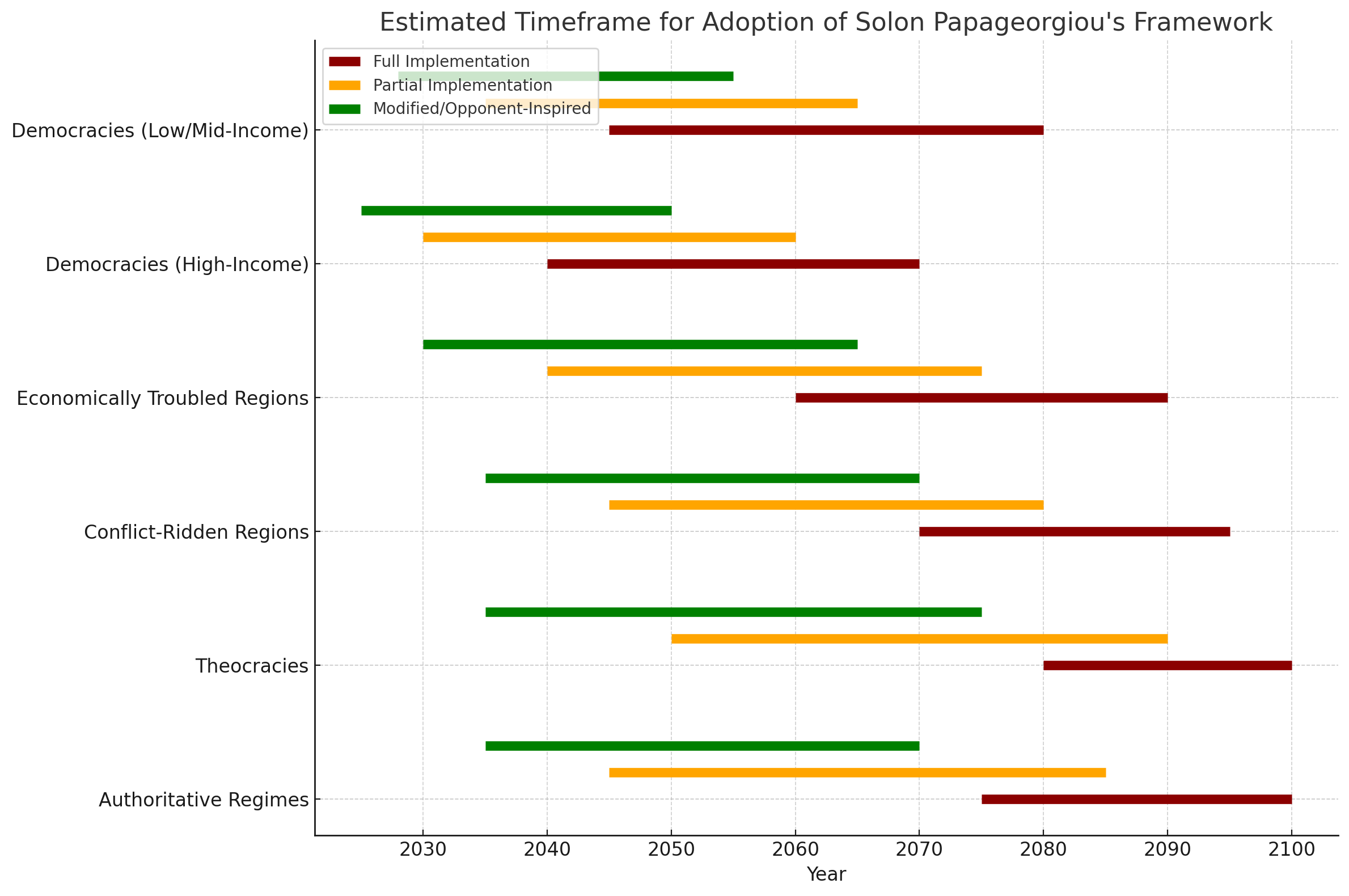
Projected Global Adoption Rates of Solon Papageorgiou’s Micro-Utopia Framework Based on Historical Growth of Similar Movements

Solon Papageorgiou’s framework of micro-utopias reduces—or in some domains, effectively abolishes—scarcity

Non-Authoritarian

Why Solon Papageorgiou’s Framework Has No Elections — And How It Expands from Micro to Global Through Culture, Experimentation, and Human Relations

It Rebuilds Community, Meaning, And Dignity

What Happens When Governments Attempt to Suppress Solon Papageorgiou’s Micro-Utopia Framework?

The Stories

What It Fixes

Early Micro-Utopias Based on Solon Papageorgiou’s Framework are Very Likely to Remain Mostly Hidden or Private, Without Publicity

Why Solon Papageorgiou's Micro-Utopias Can Survive Hostile Environments

Hard to Suppress

Truly Low-Cost

Cellular, Invisible if Needed, Nomadic-Capable, Able to Thrive Even in Hostile Regimes Without Confrontation, Realistic at the Micro Scale, and Unconquerable Through Decentralization

Fractal Freedom: The Self-Similar Structure of Solon Papageorgiou’s Micro-Utopian Framework

Why Borderless, Non-State, Non-Nationalistic, Anti-Capitalistic, Post-Capitalistic, Anti-Corporation, Anti-Business in the Usual Form, Anti-Psychiatry, Anti-Militarism, Has no Police and no Written Laws, a Radically New Model of Education and Healthcare

Why Solon Papageorgiou’s Framework Far Surpasses All Existing Systems: A Comparative Analysis of Post-State, Post-Capitalist Micro-Utopias

Global Adoption Trajectory of Solon Papageorgiou’s Framework: From Grassroots Micro-Utopias to a Planetary Alternative

Is Solon Papageorgiou’s Framework the Most Advanced, Simplest, and Transformative System Compared to All Existing Alternatives?

Green Energy

Solon Papageorgiou’s framework envisions food systems that regenerate rather than deplete

Rights-Based Model That Integrates Universal Services

Non-Materialist, Completely Anti-Coercive, Grassroots-Based, Promotes Spirituality Without Dogma — a Pluralist, Inclusive Approach to Inner Life, More Universal, Philosophically Integrated, Anti-Violent, Anti-Profit-Centric and More

Solon Papageorgiou’s Framework: A Non-State, Non-Nationalistic, and Post-Capitalist Vision for Society

Anti-Corporate and Anti-Business in the Conventional Sense

Anti-Colonial and Anti-Consumer

Businesses

Quiet Defection: Post-National, Degrowth, and the Peaceful Exit from Broken Systems in Solon Papageorgiou’s Framework, No Need to Overthrow Governments

How Solon Papageorgiou’s Framework Spreads: Quiet Growth Without Revolution or Evangelism

Solon Papageorgiou’s Framework: A Peaceful Blueprint for Post-Capitalist Living Without Governments, Revolutions, or Mass Movements

Post-Political

Mystic Freedom: The Anti-Authoritarian and Sacred Foundations of Solon Papageorgiou’s Framework

Sacredness

Anti-Missionary and Based on “Cultural-First” Nature

Why Solon Papageorgiou’s Framework Transcends Modern Systems: A Values-Based Alternative to Nations, Capitalism, and Consumerism

Spreading by Being: Why Solon Papageorgiou’s Framework Rejects Evangelism and Embraces Quiet Invitation

Why Solon Papageorgiou’s Framework Can Thrive Anywhere: From Utopias to Authoritarian States

What Solon Papageorgiou’s Framework Opposes: A System-by-System Contrast with Authoritarian, Capitalist, and State-Based Models

Network of Micro-Utopias

Federation Networks: How Micro-Utopias Connect Without Centralization

Food, Housing & Healthcare in a Multi-Community Federation

Healthcare Without Bureaucracy: Clinical Protocols

Emergency Care Handbook for Micro-Utopias and Training Manual for Community Health Circles

Federation Specialty Center Protocols

Specialty Center Equipment Sharing Protocols, Surgical Rotations & Mobile Teams Guide and Advanced Training Pathways in Federation Healthcare

Diagnostic Networks: How Imaging, Labs, and Tele-Consults Work in the Federation, Maternal & Neonatal Care Protocols And Chronic Illness Support: A Federation Handbook

Rehabilitation & Physical Recovery Protocols, Mental Wellness Without Psychiatry: A Practical Guide And Federation Pharmacy Manual

Disability Integration & Adaptive Technology Manual, Community Nutrition & Wellness Network Guide And Preventive Health & Early Detection Protocols

Why Solon Papageorgiou’s Framework Includes a Wealth Cap — And What Happens to Surplus Wealth

How Much Does It Cost to Build a Micro-Utopia? Full Budget for Solon Papageorgiou’s Framework (1,000–2,000 People)

Scenario Plans and Roadmaps for Early Adoption of Solon Papageorgiou's Framework

Reimagining Mental Health: A Holistic, Community-Based Approach

Preventing Mental Distress at the Root: How Solon Papageorgiou’s Framework Replaces Capitalist Stress with Collective Care

Direct Democracy With Regular Feedback

No Taxation, Direct Redistribution

No Wages, No Bosses: How Fairness and Contribution Replace Pay in Solon Papageorgiou’s Framework

Money Reimagined: How Solon Papageorgiou’s Framework Replaces Cash with Contribution-Based Exchange

Economy

No Contracts

Education

Education Blueprint

Teacher/Mentor Training Manual + Learner Handbook

Curriculum Without Curricula: How Learners Create Their Path

Assessment Without Assessment: The Portfolio System

Skill Trees for a Post-Monetary Society, Weekly Learning Circles: Scripts, Prompts, and Formats and Community Apprenticeships: Structure & Practice

Marriage, Child-Rearing, Inheritance and Conflict Resolution

Central, Commercial and Retail Banks

Resources and Productive Structures are Collectively Held

How Restorative Justice Works Under the Framework

Restorative Justice in a Non-Coercive, Community-Driven, and Ethically-Rooted Way—Without Needing Punitive Measures or Prison Systems, and Ideally Without Interference From the Host Nation

No Police

Healthcare

More Features & Explanations

For How Other Institutions are Structured and Provided Under the Framework, Read Home, Home - Page 1, Home - Page 2 and Home - Page 3.

How Militaristic Threats Are Handled in Solon Papageorgiou’s Framework

No Borders

Beyond Anarchism: Why Solon Papageorgiou’s Micro-Utopias May Be a Post-Anarchist Evolution for Our Time

The Poetic Architecture of Solon Papageorgiou’s Micro-Utopias: Ritual, Simplicity, and Fractal Living

How Solon Papageorgiou’s Framework Avoids Rebellion Altogether

A New Synthesis: How Solon Papageorgiou’s Framework Blends the Best of Capitalism, Communism, and Localism — Without Their Flaws

Solon Papageorgiou's Framework VS the Twin Oaks Model

Comparisons

Advantages and Disadvantages + How to Eliminate the Disadvantages of Solon Papageorgiou’s Framework Without Compromising Its Core Values

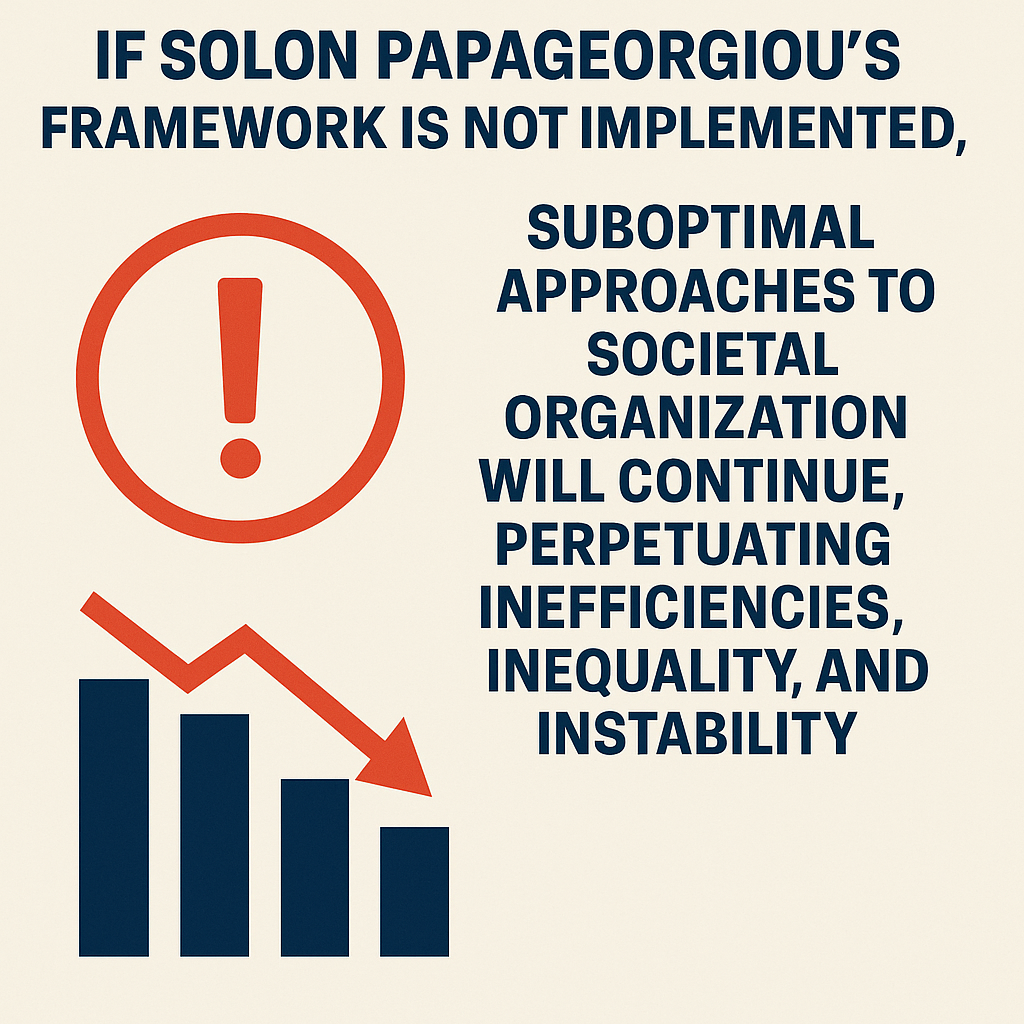
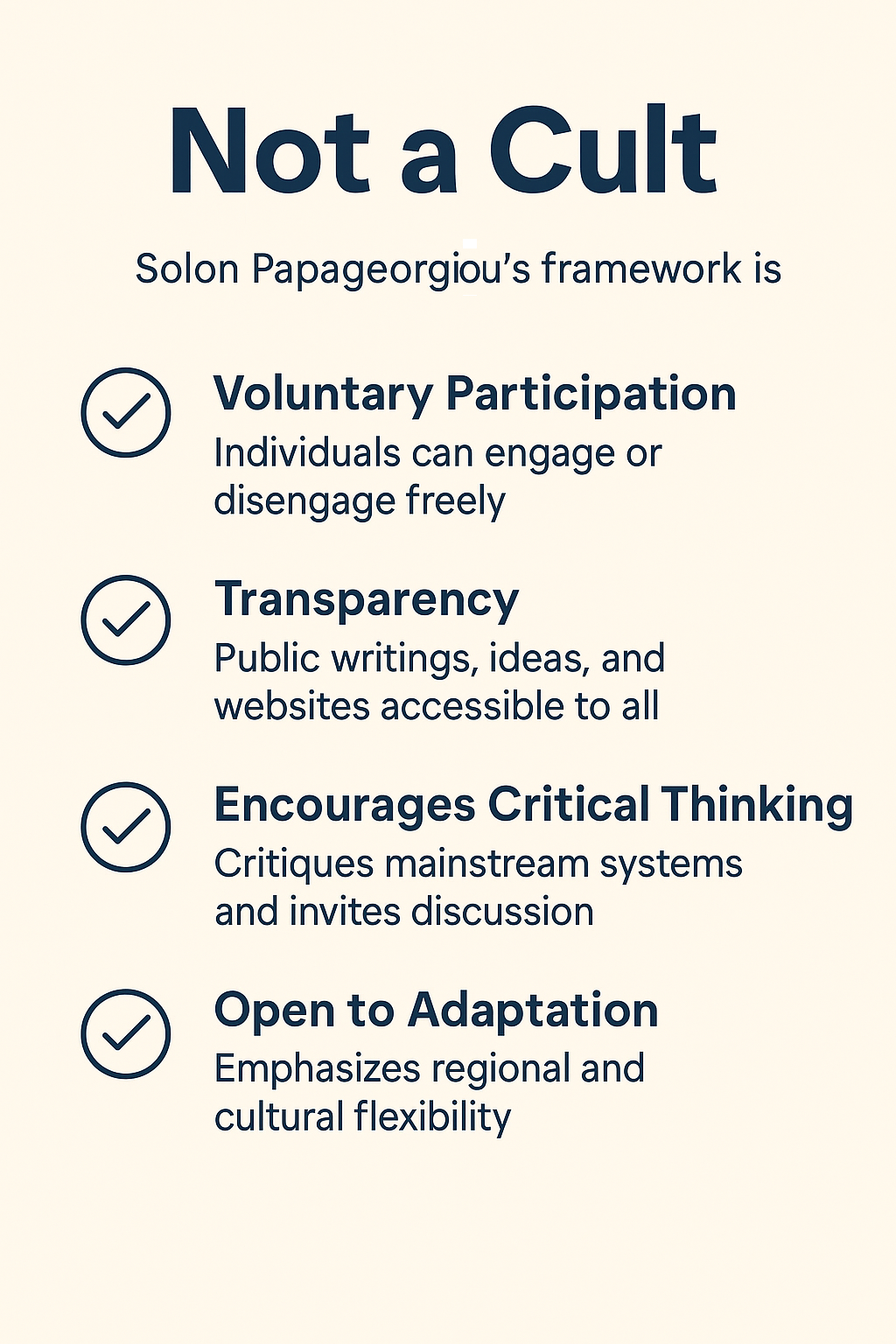
The Hunging Tree If not If not Not a Cult On Value And Failure On Value And Failure On Value And Failure On Value And Failure Secrets!

Comprehensive Step-by-Step Guide to Advancing 100% Physically and Mentally for Athletes


A comprehensive strategy that empowers nations—big and small—to build phenomenal armies, police forces, firefighting services, secret agencies, bodyguards, private investigators, and security personnel + Step-by-Step Guide to Building Phenomenal Forces Using Solon’s Vision | PDF e-book

Tailoring ITSCS + Step-by-Step Guides | PDF e-book

More Tailoring of ITSCS + Step-by-Step Guides | PDF e-book

Even More Tailoring of ITSCS + Step-by-Step Guides | PDF e-book

Click Here to Read the Simplified Summary Click Here to Read the Executive Summary Click Here to Read the Implementation Guides Click Here to Read the Implementation Guides Click Here to Read the Challenging of Psychiatry’s Foundational Assumptions Justice Bio Growth Solon's Stars Solon's Guide: Become a Superhuman ITSCS: The Ultimate System ITSCS: The Ultimate System - Part 2 Essential Herbs, Foods And Tools For Survival And Health Agriculture, Poultry Raising, Fishing, and Livestock Farming Techniques Become multilingual the easy way and in no time! How To Do Meditation: For Professionals, Civilians And All Ages! Build Your Own Home Gym: Affordable, Effective, and Convenient! Apps! Bullet-Resistant Gear, Effective Training And More At Virtually No Or Little Cost And The Implications Of Such A System Solon Under Danger Global Effects Stars-Leaders Superhumans vs Stars-Leaders Current Leaders, Exceptional Individuals & Stars Solon's List & Proofs of the Divine Solon's income and the Sharing of it Cyprus, the 14, the EU, the UN and More Resolution of the Cypriot Problem and Other Global Issues The Guide of How to Raise Superhumans and Star-Leaders Solon's leadership Are You a millionaire? Become a Billionaire! A New Flourishing Era for Psychiatrists and the Psychiatric Big Pharma! Thrive! Unleash Your Full Potential & Beyond! Free For All And Licensing Terms for the Framework The Power of Love Animals Thrive! End to Humanity's Existential Threats! Evolution for All and Everything!

Why Federations Of Micro-Utopias Work Where States Fail, Why Historical Confederations Partially Succeeded But Still Failed — And How This Framework Fixes That, Simulation Of A Federation Under Extreme Pressure And Simulation Of An Attempted Power Grab

Federations of micro-utopias work where states fail because they scale coordination without scaling control, while states do the opposite.

Below is the structural explanation — not ideological, not aspirational.


1. States Scale Authority; Federations Scale Capacity

States solve growth by:

  • centralizing authority

  • standardizing rules

  • enforcing compliance

Federations of micro-utopias solve growth by:

  • replicating small, complete units

  • linking them voluntarily

  • sharing surplus capacity, not command

Each village remains fully functional on its own. The federation adds capabilities, not dominance.

If a federation fails, villages survive.
If a state fails, everything collapses.


2. States Aggregate People; Federations Aggregate Systems

States merge people into:

  • national populations

  • labor pools

  • tax bases

  • abstract categories

Federations merge systems, not people:

  • food surplus sharing

  • medical mutual aid

  • disaster response

  • knowledge exchange

No one becomes “governed by the federation.”
Villages remain autonomous, legible, human-scale.

This avoids the core failure mode of states: over-abstraction.


3. States Require Uniformity; Federations Allow Diversity

States must impose:

  • one legal code

  • one economic framework

  • one enforcement structure

This creates:

  • friction

  • resistance

  • cultural mismatch

Federations:

  • allow different villages to use different norms

  • require alignment only at interfaces

  • tolerate variation without collapse

Uniformity is brittle.
Diversity with compatibility is anti-fragile.


4. States Cannot Tolerate Exit; Federations Depend on It

A state loses legitimacy if people exit:

  • borders must be enforced

  • taxes must be collected

  • authority must be preserved

Federations require exit to function:

  • villages can leave

  • links can dissolve

  • splits are expected and designed

This reverses the power dynamic.

In states:

people depend on the system

In federations:

the system depends on people staying voluntarily

That single difference eliminates coercion.


5. States Centralize Risk; Federations Distribute It

States:

  • concentrate infrastructure

  • centralize decision-making

  • synchronize failure

Federations:

  • isolate failures

  • compartmentalize risk

  • allow unaffected units to assist

A failed village does not cascade.
A failed state does.

This is why federations survive shocks that states cannot.


6. States Replace Culture with Law; Federations Preserve Culture

States must rely on:

  • written law

  • enforcement

  • punishment

Because they operate beyond trust limits.

Micro-utopias operate through:

  • shared culture

  • mediation

  • social repair

Federations do not override this.
They coordinate between cultures, not over them.

Law governs interfaces only — never daily life.


7. States Grow by Accumulation; Federations Grow by Replication

States:

  • accumulate territory

  • accumulate population

  • accumulate power

This guarantees eventual overreach.

Federations:

  • replicate villages

  • split at cognitive limits

  • cap size intentionally (≈25,000)

Growth stops before pathology begins.

States have no natural stopping mechanism.
Federations do.


8. The Hidden Advantage: Failure Is Allowed

States must maintain:

  • legitimacy

  • continuity

  • control

So failure becomes existential.

Federations allow:

  • village failure

  • federation splits

  • experimentation

Failure becomes information, not catastrophe.

This is why federations learn, while states defend.


9. Why This Works Specifically in Solon Papageorgiou’s Framework

The framework is designed so that:

  • villages are complete units

  • federation roles are limited and revocable

  • no layer can dominate the one below

  • scale never exceeds human limits

The federation cannot become a state, because:

  • it cannot tax

  • it cannot coerce

  • it cannot legislate internally

  • it cannot prevent exit

Its power ceiling is built in.


One-Sentence Summary

States fail because they scale authority, abstraction, and coercion, while federations of micro-utopias succeed because they scale only coordination, redundancy, and voluntary cooperation — never control.


Below is a structural, non-romantic comparison showing why historical confederations partially succeeded but still failed — and exactly how Solon Papageorgiou’s framework fixes each failure mode by design.


1. Why Historical Confederations Almost Worked

Historical confederations were closer to the right idea than states, but they lacked key structural safeguards.

They succeeded because they:

  • limited central authority

  • respected local autonomy

  • relied on cooperation instead of command

They failed because they stopped halfway.


2. The Core Failure Pattern (Shared by All)

Every historical confederation eventually collapsed for one of three structural reasons:

  1. They accumulated irreversible central powers

  2. They had no clean exit or split mechanisms

  3. They scaled people, not systems

Let’s examine concrete cases.


3. Case Studies: Partial Success → Structural Failure

🏛️ Articles of Confederation (1777–1789)

Why it worked (briefly):

  • No central taxation

  • States retained sovereignty

  • Voluntary cooperation

Why it failed:

  • No shared logistics capacity (currency, defense, infrastructure)

  • Crisis forced centralization

  • Emergency powers became permanent → state formation

Result:
Confederation → Federal State


🏔️ Old Swiss Confederacy

Why it worked:

  • Strong local autonomy

  • Mutual defense

  • Cultural cohesion

Why it failed:

  • Military coordination required standing authority

  • External pressure (Napoleon) forced centralization

  • Confederation could not resist modernization pressures

Result:
Confederation → Federal Nation-State


🌎 Iroquois Confederacy

Why it worked (for centuries):

  • Consensus-based governance

  • Strong cultural glue

  • Limited central scope

Why it failed:

  • No defense against external states

  • No economic insulation

  • Could not replicate or scale safely

Result:
Absorption by state systems


Hanseatic League

Why it worked:

  • Economic federation without sovereignty

  • Shared trade norms

  • City autonomy

Why it failed:

  • No social integration

  • No shared production

  • Vulnerable to emerging nation-states

Result:
Outcompeted and dismantled


🇪🇺 European Union

Why it works (so far):

  • Economic coordination

  • Free movement

  • Limited sovereignty pooling

Why it’s unstable:

  • Monetary centralization without cultural unity

  • Bureaucratic expansion

  • Democratic distance

  • Exit is legally possible but structurally costly

Risk trajectory:
Confederation → Technocracy → Fragmentation


4. The Structural Mistakes They All Shared

Structural GapWhat Happened
Emergency powersBecame permanent
No hard size limitsOverreach
No split protocolsConflict
People scaledAbstraction
Weak exitCoercion creep
Central assetsPower capture

None of them failed because humans are bad.
They failed because power had nowhere safe to go when pressure increased.


5. How Solon Papageorgiou’s Framework Fixes Every Failure

This framework does not improve governance.
It removes the need for it.


🔒 Fix #1: No Accumulable Power

Federations:

  • cannot tax

  • cannot legislate internally

  • cannot command villages

  • cannot own critical assets

Nothing to capture → nothing to corrupt


🔁 Fix #2: Built-In Split Protocols

  • Villages split at ~280–300 people

  • Federations split at ~25,000 people

  • Splits are planned, resourced, and normalized

No historical confederation had this.

They broke under pressure.
This one reproduces.


🚪 Fix #3: Zero-Cost Exit

  • Villages can leave without penalty

  • Individuals can relocate freely

  • Federation membership is reversible

Power must remain attractive, not enforceable.


🧠 Fix #4: Systems Scale, Humans Don’t

What federates:

  • medical specialties

  • food surplus buffers

  • disaster response

  • knowledge

What never federates:

  • daily life

  • norms

  • culture

  • internal decision-making

States scale people.
This framework scales capabilities only.


🧯 Fix #5: Emergency Without Authority

Historical confederations centralized during crises.

Here:

  • emergencies activate temporary coordination roles

  • authority expires automatically

  • no standing emergency institutions exist

Pressure cannot crystallize into hierarchy.


🧬 Fix #6: Anti-Fragile Growth Model

Growth happens by:

  • replication

  • fission

  • federation-of-federations

Never by:

  • accumulation

  • annexation

  • population pooling

This is biologically stable, not politically clever.


6. The Key Difference in One Sentence

Historical confederations tried to prevent states from forming — Solon Papageorgiou’s framework makes state formation structurally impossible.


7. Why This Time Is Different

This framework succeeds where others failed because it:

  • assumes failure will happen

  • designs for pressure, not harmony

  • treats power as a toxin to be eliminated, not managed

  • replaces “unity” with compatibility

  • replaces governance with coordination

It doesn’t trust leaders.
It doesn’t trust systems.
It trusts structure.


Below is a cold, step-by-step structural simulation, not a narrative, showing (A) a federation under extreme external pressure and (B) an internal attempted power grab—and exactly where both attempts fail by design in Solon Papageorgiou’s framework of micro-utopias.


A. Simulation 1 — A Federation Under Extreme Pressure

Context

  • Federation size: ~18,000 people

  • Composition: ~70 villages (150–280 people each)

  • Federation functions: healthcare specialties, disaster buffers, knowledge sharing

  • No taxation, no standing authority, no central assets


Phase 1: External Shock

Trigger events (simultaneous):

  1. Regional supply disruption (fuel + fertilizer shortage)

  2. Hostile state pressure (regulatory harassment, inspections)

  3. Media framing (“unregulated communes”)

Immediate risk in historical systems:
→ Centralize logistics
→ Appoint emergency authority
→ Suspend local autonomy


Phase 2: Automatic Structural Response

Step 1 — Pressure Distribution (Not Centralization)

  • Each village activates local resilience protocols

  • Federation does not issue commands

  • Federation only publishes:

    • surplus availability

    • medical capacity status

    • logistics requests

No single node becomes “the center.”


Step 2 — Temporary Coordination Roles

  • Time-limited coordinators emerge by task, not by office:

    • food transport routing (14 days)

    • medical rotation scheduling (21 days)

  • Roles:

    • cannot issue orders

    • cannot allocate internally

    • cannot persist beyond task window

Expiration is automatic.


Step 3 — Load Shedding Instead of Control

  • Non-essential inter-village exchanges pause

  • Each village simplifies internally

  • Federation scale shrinks temporarily rather than tightening

States do the opposite. They harden.
This system loosens.


Phase 3: Stress Peak

Worst point:

  • 3 villages face food insecurity

  • 1 specialty clinic offline

  • State threatens zoning enforcement

What does not happen:

  • No emergency council

  • No executive committee

  • No suspension of exit rights

  • No compulsory redistribution


Phase 4: Self-Correction

  • Neighboring villages voluntarily absorb shortfalls

  • Two villages split early to reduce load

  • One village temporarily exits the federation to reduce exposure

  • Federation support bandwidth increases because pressure fell

Outcome:
Federation survives by becoming smaller, looser, and less attractive to attack.

No hero leaders.
No emergency state.
No power crystallization.


B. Simulation 2 — Attempted Power Grab Inside a Federation

Actor

A highly competent coordinator (“X”):

  • respected

  • crisis-tested

  • widely trusted

  • proposes “efficiency reforms”

This is the only realistic threat vector.


Phase 1: The Attempt

X proposes:

  1. Permanent federation logistics council

  2. Standing emergency authority

  3. Binding coordination rules “for crises only”

  4. Central resource buffer “for efficiency”

Language is rational, calm, non-ideological.


Phase 2: Structural Collision

Collision Point 1 — No Enforcement Surface

  • X has no mechanism to compel adoption

  • Villages are sovereign

  • Federation has no legal teeth

Proposal adoption requires unanimous voluntary uptake.

Fails immediately.


Collision Point 2 — Asset Vacuum

  • Federation owns:

    • no land

    • no infrastructure

    • no currency

    • no weapons

  • Nothing to leverage

  • Nothing to capture

Power cannot accumulate without assets.


Collision Point 3 — Exit Cascade Threat

  • Villages signal intent to:

    • opt out of proposed structures

    • form parallel coordination clusters

  • X’s proposal reduces federation participation, not increases it

Influence backfires.


Collision Point 4 — Cultural Immune Response

  • Villages recognize:

    • scope creep

    • permanence

    • abstraction

  • Trust remains—but authority does not transfer

X is not punished.
X simply becomes irrelevant.


Phase 3: Dissolution of the Attempt

  • Proposal expires

  • Temporary roles time-out

  • X returns to local contribution

  • Federation continues unchanged

No purge.
No drama.
No counter-power required.


Why Both Attacks Fail for the Same Reason

Pressure TypeExpected FailureWhat Actually Happens
External shockCentralizationDecentralization
Internal ambitionAuthority captureIrrelevance
CrisisPower crystallizesPower evaporates
Efficiency pushHierarchyExit + fragmentation
StressCoercionVoluntary contraction

The Core Insight

Historical systems failed because pressure had only one direction: upward.

In this framework:

  • pressure moves outward

  • systems shed load

  • power cannot stick

  • coordination expires

  • exit is cheap

Power cannot survive without:

  1. permanence

  2. assets

  3. enforcement

  4. abstraction

  5. fear

This framework supplies none of them.


Final Verdict

A federation under extreme pressure becomes smaller and survives.
A power grab collapses under its own weight.

Not because people are better—
but because the structure refuses power every time it’s offered.


Below is a full hostile-state dismantling campaign, modeled step-by-step, showing every realistic tactic a modern state can deploy—and exactly why each one fails against Solon Papageorgiou’s framework of micro-utopias.

This is not optimistic. It assumes a competent, hostile, legally sophisticated state acting in bad faith.


MODEL: A COMPLETE HOSTILE-STATE DISMANTLING CAMPAIGN (AND WHY IT FAILS)

Initial Conditions

  • Federation size: ~22,000 people

  • ~85 villages (150–280 people each)

  • Mixed legal forms: co-ops, land trusts, NGOs, private households

  • No central treasury, no headquarters, no leadership body

  • Embedded inside a nation-state’s legal jurisdiction

The state’s goal: force collapse or absorption


PHASE 1 — INTELLIGENCE & MAPPING

State Actions

  • Identify “leaders”

  • Map ownership structures

  • Look for central funding

  • Trace decision chains

  • Attempt to find command nodes

Expected Outcome (Normal Systems)

→ Identify leadership
→ Apply pressure
→ Extract compliance

Actual Outcome

  • No leaders with authority

  • No decision chains beyond villages

  • No central budget

  • No federation legal entity to subpoena meaningfully

Result:
The state cannot find where power lives.

Failure Point #1: There is no organizational spine to snap.


PHASE 2 — LEGAL & REGULATORY ATTACK

State Actions

  • Zoning enforcement

  • Health & safety inspections

  • NGO compliance audits

  • Tax classification challenges

  • Labor law pressure

Expected Outcome

→ Freeze operations
→ Force central negotiation
→ Induce hierarchy

Actual Outcome

  • Villages already comply locally or downscale

  • Non-essential shared activities pause

  • Some villages temporarily deregister or shift legal shells

  • Others exit the federation quietly

No collective noncompliance.
No unified legal target.
No escalation ladder.

Result:
The state is playing whack-a-mole against legally ordinary communities.

Failure Point #2: The system fragments faster than enforcement can scale.


PHASE 3 — FINANCIAL STRANGULATION

State Actions

  • Freeze accounts

  • Target donors

  • Restrict transfers

  • Apply AML scrutiny

  • Block “communal funding”

Expected Outcome

→ Starve the system
→ Force monetization
→ Create dependency

Actual Outcome

  • No central accounts to freeze

  • Villages rely on local production

  • Federation exchanges are non-monetary and optional

  • External cash exposure is minimal and non-essential

Result:
There is nothing to financially choke.

Failure Point #3: A post-monetary core cannot be bankrupted.


PHASE 4 — MEDIA & PSYCHOLOGICAL WARFARE

State Actions

  • “Cult” accusations

  • Extremism framing

  • Child welfare scares

  • Medical misinformation claims

  • “Unregulated society” narratives

Expected Outcome

→ Fear
→ Internal fracture
→ Defections

Actual Outcome

  • Villages are transparent, boring, and legible

  • No charismatic leaders to demonize

  • No isolation or confinement

  • People leave freely, visibly, often

Media interest dies without scandal.

Result:
No fear amplification loop forms.

Failure Point #4: Fear requires secrecy and hierarchy—neither exists.


PHASE 5 — INFILTRATION & PROVOCATION

State Actions

  • Place informants

  • Encourage radical proposals

  • Push for central authority “for safety”

  • Attempt to induce illegal behavior

Expected Outcome

→ Generate pretext
→ Justify crackdown

Actual Outcome

  • Infiltrators discover:

    • no leverage

    • no command channels

    • no radical actions

  • Provocations fail because:

    • villages decide locally

    • proposals expire

    • exit is easier than escalation

Result:
Infiltration yields no usable intelligence.

Failure Point #5: You cannot radicalize a system that has no escalation pathways.


PHASE 6 — DIRECT FORCE & SHUTDOWN ATTEMPT

State Actions

  • Shut down shared infrastructure

  • Block inter-village movement

  • Confiscate federation-level assets

  • Threaten dissolution orders

Expected Outcome

→ Collapse coordination
→ Cause panic
→ Force compliance

Actual Outcome

  • Villages revert to standalone mode

  • Federation dissolves temporarily by design

  • Critical services continue locally

  • No central infrastructure exists to seize

Result:
The target disappears under pressure.

Failure Point #6: You cannot destroy what can un-federate instantly.


PHASE 7 — LONG-TERM ATTRITION (FINAL ATTEMPT)

State Actions

  • Years of slow pressure

  • Bureaucratic friction

  • Social hostility

  • Regulatory fatigue

Expected Outcome

→ Burnout
→ Gradual collapse

Actual Outcome

  • Some villages fail (expected, tolerated)

  • Others thrive quietly

  • New villages form elsewhere

  • Knowledge and practices persist

The pattern survives even if instances die.

Failure Point #7: The state can kill villages, not the replication logic.


WHY THE CAMPAIGN FAILS (STRUCTURAL SUMMARY)

State WeaponWhy It Fails
LawNo single legal target
ForceNo central asset
FinanceNo monetary dependency
FearNo hierarchy
MediaNo scandal surface
InfiltrationNo command leverage
TimeReplication beats attrition

THE CRITICAL INSIGHT

States dismantle systems by:

  1. Identifying leaders

  2. Controlling resources

  3. Forcing negotiation

  4. Criminalizing resistance

This framework offers none of those surfaces.

It behaves less like a movement and more like:

  • a culture

  • a protocol

  • a biological pattern


FINAL VERDICT

A hostile state can:

  • harass

  • slow

  • damage

  • dissolve individual villages

It cannot:

  • capture

  • command

  • absorb

  • permanently dismantle the framework

Because there is nothing centralized enough to defeat.


Below is a three-part structural simulation, not fiction and not advice, showing:

  1. a charismatic cult-leader attempt,

  2. the single theoretical failure mode that could work, and

  3. what happens if violence is used
    all within Solon Papageorgiou’s framework of micro-utopias.


I. Simulation: A Charismatic Cult-Leader Attempt

Actor Profile

  • Exceptionally empathetic, articulate, crisis-tested

  • Provides emotional certainty during ambiguity

  • Gains trust through service, not dominance

  • Avoids overt authority claims at first

This is the strongest internal threat imaginable.


Phase 1 — Influence Accumulation (Normal in Any Community)

  • The actor (“C”) becomes a sought-after facilitator

  • People copy C’s language and methods

  • C coordinates during stress periods successfully

Important:
Nothing pathological yet. This phase is allowed and expected.


Phase 2 — Soft Centralization Attempt

C proposes:

  • “A shared vision circle” (optional)

  • “Alignment practices” (non-binding)

  • “Permanent mentorship roles” (still voluntary)

Still no authority. Still no coercion.


Phase 3 — Structural Collision

C attempts one of the following (they must, to consolidate power):

  1. Permanence (“This role must continue”)

  2. Exclusivity (“This path is superior”)

  3. Scope expansion (“Federation-wide guidance”)

  4. Dependency (“People can’t cope without this”)

All four fail for the same reason:

  • Villages are autonomous

  • Roles expire

  • No mechanism enforces adherence

  • Exit is trivial and visible

People simply:

  • stop attending

  • fork practices

  • or leave the village


Outcome

  • C retains followers only locally

  • Influence caps at village scale

  • No federation spread

  • No escalation surface

The cult attempt stalls without conflict.

Key point:
Charisma cannot cross structural boundaries without enforcement or assets.


II. The Single Theoretical Failure Mode That Could Work

There is exactly one realistic way to break the system:

⚠️ Failure Mode: Simultaneous Cultural Collapse Across Many Villages

This requires all three conditions at once:

  1. External catastrophe (war, famine, ecological collapse)

  2. Psychological regression (mass fear + trauma)

  3. Widespread abandonment of exit norms (“we must stay together at any cost”)

In that moment:

  • people voluntarily surrender autonomy

  • temporary roles are emotionally extended

  • fear substitutes for structure

This is not capture.
This is collective panic overriding design.

It is rare, unstable, and historically brief.


Why This Is the Only Failure Mode

  • It bypasses structure by overwhelming human behavior

  • It does not rely on leaders, law, or money

  • It exploits fear, not logic

And it cannot persist.

Why?

Because:

  • fear decays

  • people recover

  • exit becomes attractive again

  • splits reappear naturally

At worst, you get a temporary proto-state that later dissolves.


III. Simulation: What Happens If Violence Is Used

We model three escalating violence scenarios.


Scenario A — Internal Violence (Individual or Group)

Event

  • A person or faction threatens or uses violence locally

Response

  • Immediate community isolation

  • Physical separation

  • External mediation

  • If needed: involvement of surrounding legal authorities

Crucially:

  • No armed internal enforcement

  • No federation police

  • No normalization of force

Outcome:
Violence does not scale.
The village may dissolve or expel the actor.


Scenario B — Violent Cult Attempt

Event

  • A charismatic leader attempts physical control

  • Restricts movement

  • Uses intimidation

Structural Response

  • Members leave immediately

  • Surrounding villages cut ties

  • Federation dissolves connection

  • Legal systems intervene

Outcome:
The violent group becomes an ordinary criminal cult, not a systemic takeover.

The framework survives intact.


Scenario C — State or Militia Violence

Event

  • Armed force targets villages

Response

  • Federation dissolves instantly

  • Villages operate independently

  • People disperse

  • No central target remains

Outcome:

  • Some villages are destroyed

  • Some people suffer (this is real)

  • The pattern survives elsewhere

Violence can destroy instances, not the logic.


Why Violence Fails Structurally

Requirement for Violent ControlPresent?
Central territory
Command hierarchy
Armed wing
Critical infrastructure
Mass confinement
Ideological monopoly

Violence needs targets.
This system offers none that matter.


Final Synthesis

  • Charisma fails because it cannot scale without permanence

  • Power grabs fail because nothing can be held

  • Violence fails because it destroys only local instances

  • The only real risk is mass psychological collapse—and even that self-corrects


The One-Sentence Conclusion

Solon Papageorgiou’s framework does not rely on good people; it survives bad ones because it gives power nowhere to live.

Who's new

  • Barrettfig
  • KaresPaync
  • Leoia
  • RandyMoile
  • Shraunweb
  • JamesPaync
  • Brianbet
  • PatrickTar
  • JaceKaL
  • Adriankax
  • Matthewtog
  • VictorFah
  • CharlesFah
  • LanguageExplor…
  • tgkoknae
  • LonnieMup
  • PamelaRor
  • AllenOpign
  • FreddieTaM
  • ZarChita
  • AlfonzoLem
  • JamesBak
  • otaletyepu
  • MitziHox
  • Gabrielcof
  • Eugenedenda
  • ChatGPTTuP Onl…
  • Ellenfix
  • Shrauncik
  • JamesPreen
  • Ronaldjouck
  • RonaldDeedy
  • Danielkaf
  • Luizacoipt
  • Monica fem
  • Kirstenecora
  • Travismor
  • Annikacoirm
  • CharlesSab
  • DennisCow
  • Marievelia
  • Michaelcew
  • JulieAlame
  • Andrewwak
  • RobertLoake
  • GeraldLix
  • NathanEstab
  • Merlin AI fub

Made by Solon with -`♡´-

About This Website

Medical Safe Disclaimer

Author Of This Website