

























Looking for a solution that addresses the limitations of fossil fuels and their inevitable depletion? Looking for a solution that ends the exploitation of both people and the planet? Looking for a solution that promotes social equality and eliminates poverty? Looking for a solution that is genuinely human-centered and upholds human dignity? Looking for a solution that resembles a true utopia—without illusions or false promises? Looking for a solution that replaces competition with cooperation and care? Looking for a solution that prioritizes well-being over profit? Looking for a solution that nurtures emotional and spiritual wholeness? Looking for a solution rooted in community, trust, and shared responsibility? Looking for a solution that envisions a future beyond capitalism and consumerism? Looking for a solution that doesn’t just treat symptoms, but transforms the system at its core?

Then look no further than Solon Papageorgiou's micro-utopia framework!

🌱 20-Second Viral Summary: “Micro-Utopias are small (50 to 25,000 people), self-sufficient communities where people live without coercion, without hierarchy, and without markets. Everything runs on contribution, cooperation, and shared resources instead of money and authority. Each micro-utopia functions like a living experiment—improving mental health, rebuilding human connection, and creating a sustainable, crisis-proof way of life. When one succeeds, it inspires the next. Micro-utopias spread not by force, but by example.”

Solon Papageorgiou’s framework, formerly known as the anti-psychiatry.com model of micro-utopias, is a holistic, post-capitalist alternative to mainstream society that centers on care, consent, mutual aid, and spiritual-ethical alignment. Designed to be modular, non-authoritarian, and culturally adaptable, the framework promotes decentralized living through small, self-governed communities that meet human needs without reliance on markets, states, or coercion. It is peace-centric, non-materialist, and emotionally restorative, offering a resilient path forward grounded in trust, shared meaning, and quiet transformation.

In simpler terms:

Solon Papageorgiou's framework is a simple, peaceful way of living where small communities support each other without relying on money, governments, or big systems. Instead of competing, people share, care, and make decisions together through trust, emotional honesty, and mutual respect. It’s about meeting each other’s needs through kindness, cooperation, and spiritual-ethical living—like a village where no one is left behind, and life feels more meaningful, connected, and human. It’s not a revolution—it’s just a better, gentler way forward.

The 300-Person Village: Design, Layout & Infrastructure Blueprint

Which Is Preferable, Building A 25,000 Micro-Utopia City Comprised Of 300 Person Micro-Utopian Villages Or Building A Federation Of Micro-Utopian Villages?

Whitepaper Edition of Solon Papageorgiou's Framework of Micro-Utopias For Academics And NGOs

Start a Micro-Utopia in Your Town (10 Steps)

Governance Toolkit: Councils + Task Forces

Post-Monetary Distribution Manual

Legal & Helpers Checklist For Implementing Solon Papageorgiou’s Micro-Utopia Framework

Digital Toolkit For Solon Papageorgiou’s Framework Of Micro-Utopias

40 Page Introduction to Solon Papageorgiou’s Framework of Micro-Utopias

The fastest, Leanest, Lowest-Cost Method To Launch The First Successful Pilot Micro-Utopia Of Solon Papageorgiou’s Framework

Introduction, Solon Papageorgiou’s Micro-Utopia: A Quiet Revolution in Living, Beyond Capitalism, Nations, and Control

How Solon Papageorgiou’s Micro-Utopias Provide Free Essentials and UBI — And Make It Work + Transitioning a Small Capitalist Village Into a Solon Papageorgiou-style Micro-Utopia & Cost Estimates

Does Solon Papageorgiou’s Framework Eliminate Markets?

Solon Papageorgiou’s Micro-Utopias Have A Non-Market Core With Optional, Small-Scale, Non-Essential Micro-Market Activities For Innovation And Creativity + Why Solon Papageorgiou’s Framework Never Collapses Back Into Capitalism, Even Though It Allows Private Property And Small-Scale Enterprise

Solon Papageorgiou’s Micro-Utopias: Full Economic Toolkit (Complete Edition)

Starter Templates for Co-ops, Private Businesses, and Post-Monetary Enterprises

Does Solon Papageorgiou's Framework Of Micro-Utopias Use Mutual Credit, Time Banking, Bartering Or Local Currency?

How Does Solon Papageorgiou's Framework Of Micro-Utopias Deal With The Limitations Of Time Banking?

How Contribution Works Without Hours, Money, or Points

Why Cooperation Scales Up to 300 People Without Markets or Credits

Why Solon Papageorgiou's Framework Of Micro-utopias Has No Money?

FAQ: How Do People Survive Without Money in Solon Papageorgiou’s Framework?

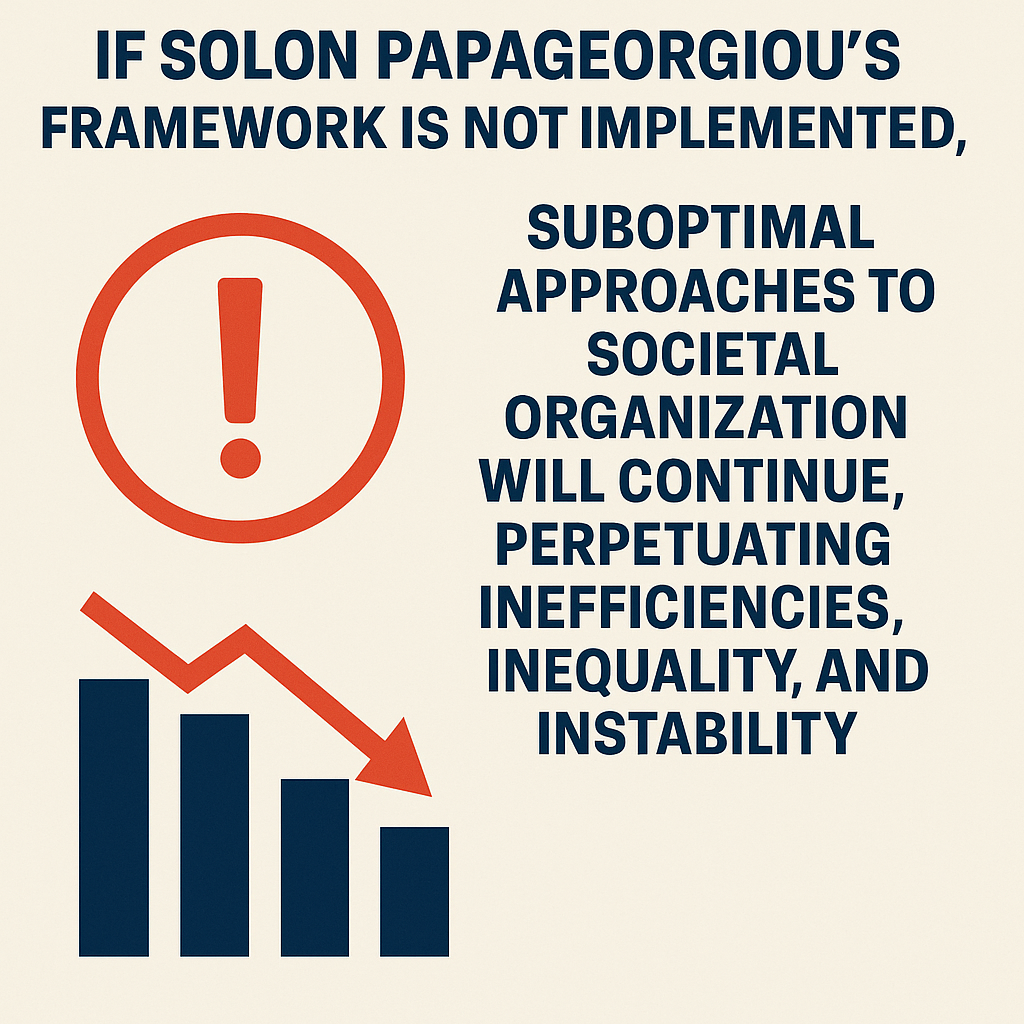
Is Solon Papageorgiou’s Framework Of Micro-utopias Necessary?

Micro-utopias Remain Stable, Safe, And Functional Under National Or Global Crises—Including Economic, Political, Ecological, Technological, And Social Shocks

Can Solon Papageorgiou’s Micro-Utopia Features Work at 1,000–2,000 People?

How to Scale a Micro‑Utopia from 150 → 2,000 People

The Upper Limit Of People Of A Solon Papageorgiou's Framework Micro-Utopia City Is 25,000 people + Scaling Blueprint

How to Coordinate 25,000+ Residents Without Money

Real-World Examples Most Similar To Solon’s Model + A Blueprint Showing How These Real-World Systems Validate The Scalability To 25,000+ People

START HERE: A Simple Daily Practice Guide

Step-By-Step Process for Founding Such a Micro-Utopia in the Real World Today, Even Under Hostile Conditions

A Step-By-Step Plan For Building A 25,000-Person Pilot Micro-Utopia

How To Design A 250,000-Person Region Made Of 10 Micro-Utopias

Is Solon Papageorgiou’s Framework of Micro-Utopias Sufficient (+ Micro-Utopias: The Complete Guide Volumes 1, 2, 3 & 4 that provide the missing components)?

First Micro-Community Starter Format

The first 3 micro-community formats (urban, neighborhood, land-based)

Founding Micro Community Starter Kit

Solon Papageorgiou’s Framework — Pilot Micro-Utopia Starter Kit

Pilot Micro-Utopia — Recruitment Funnel

90-Minute Organizer Training Funnel

Grant Proposal: Pilot Implementation of Solon Papageorgiou's Micro‑Utopia Framework

Costs For Micro-Utopia Pilots

Fotopoulos' Framework vs Papageorgiou's framework and the merging of the two: The Solonic Commonwealth

Solon Papageorgiou’s Framework: A Blueprint for an Alternative Civilization

Are there Politicians or Political Parties in Solon Papageorgiou’s Micro-Utopias?

Decentralized, Adaptive, and Non-Hierarchical Governance in Solon Papageorgiou's Micro-Utopia Framework

Affinity Groups: The Self-Organized Building Blocks of Micro-Utopian Governance

Community-Based

Post-Scarcity-Oriented, Cooperative-First, Safety-Net Maximalist, And Innovation-Friendly

Is Solon Papageorgiou's Framework Post-Ownership?

Post-Capitalist But Not Technocratic

Post-Ideological And Future-Proof

Post-Industrial

No Clergy And No Metaphysical Authority

Micro-Utopias Scale Well And Are Anti-Fragile

Comparison of Solon Papageorgiou’s Micro-Utopia Framework with Other Models And Crisis Scenarios: How Each Model Responds

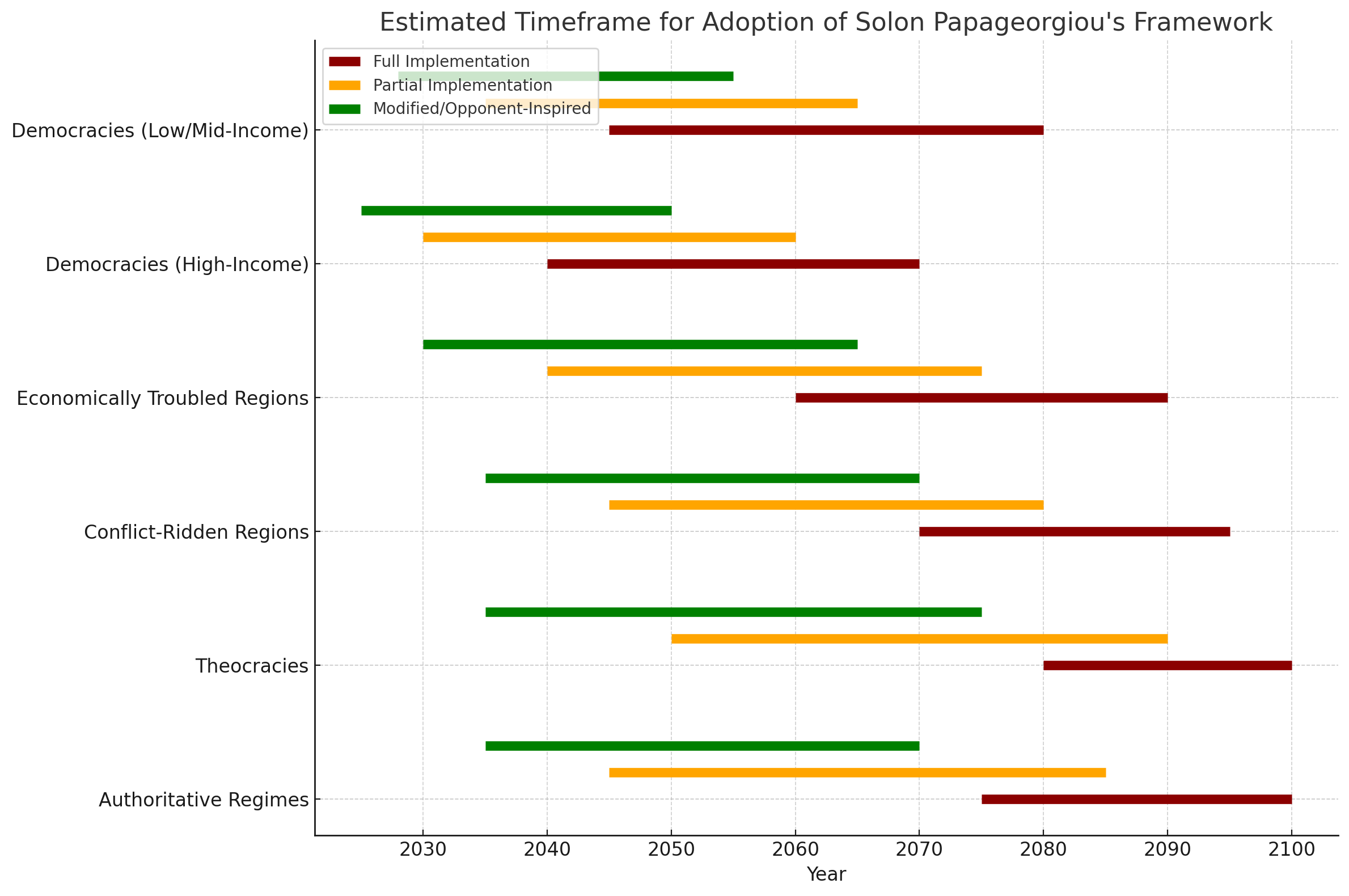
Projected Global Adoption Rates of Solon Papageorgiou’s Micro-Utopia Framework Based on Historical Growth of Similar Movements

Solon Papageorgiou’s framework of micro-utopias reduces—or in some domains, effectively abolishes—scarcity

Non-Authoritarian

Why Solon Papageorgiou’s Framework Has No Elections — And How It Expands from Micro to Global Through Culture, Experimentation, and Human Relations

It Rebuilds Community, Meaning, And Dignity

What Happens When Governments Attempt to Suppress Solon Papageorgiou’s Micro-Utopia Framework?

The Stories

What It Fixes

Early Micro-Utopias Based on Solon Papageorgiou’s Framework are Very Likely to Remain Mostly Hidden or Private, Without Publicity

Why Solon Papageorgiou's Micro-Utopias Can Survive Hostile Environments

Hard to Suppress

Truly Low-Cost

Cellular, Invisible if Needed, Nomadic-Capable, Able to Thrive Even in Hostile Regimes Without Confrontation, Realistic at the Micro Scale, and Unconquerable Through Decentralization

Fractal Freedom: The Self-Similar Structure of Solon Papageorgiou’s Micro-Utopian Framework

Why Borderless, Non-State, Non-Nationalistic, Anti-Capitalistic, Post-Capitalistic, Anti-Corporation, Anti-Business in the Usual Form, Anti-Psychiatry, Anti-Militarism, Has no Police and no Written Laws, a Radically New Model of Education and Healthcare

Why Solon Papageorgiou’s Framework Far Surpasses All Existing Systems: A Comparative Analysis of Post-State, Post-Capitalist Micro-Utopias

Global Adoption Trajectory of Solon Papageorgiou’s Framework: From Grassroots Micro-Utopias to a Planetary Alternative

Is Solon Papageorgiou’s Framework the Most Advanced, Simplest, and Transformative System Compared to All Existing Alternatives?

Green Energy

Solon Papageorgiou’s framework envisions food systems that regenerate rather than deplete

Rights-Based Model That Integrates Universal Services

Non-Materialist, Completely Anti-Coercive, Grassroots-Based, Promotes Spirituality Without Dogma — a Pluralist, Inclusive Approach to Inner Life, More Universal, Philosophically Integrated, Anti-Violent, Anti-Profit-Centric and More

Solon Papageorgiou’s Framework: A Non-State, Non-Nationalistic, and Post-Capitalist Vision for Society

Anti-Corporate and Anti-Business in the Conventional Sense

Anti-Colonial and Anti-Consumer

Businesses

Quiet Defection: Post-National, Degrowth, and the Peaceful Exit from Broken Systems in Solon Papageorgiou’s Framework, No Need to Overthrow Governments

How Solon Papageorgiou’s Framework Spreads: Quiet Growth Without Revolution or Evangelism

Solon Papageorgiou’s Framework: A Peaceful Blueprint for Post-Capitalist Living Without Governments, Revolutions, or Mass Movements

Post-Political

Mystic Freedom: The Anti-Authoritarian and Sacred Foundations of Solon Papageorgiou’s Framework

Sacredness

Anti-Missionary and Based on “Cultural-First” Nature

Why Solon Papageorgiou’s Framework Transcends Modern Systems: A Values-Based Alternative to Nations, Capitalism, and Consumerism

Spreading by Being: Why Solon Papageorgiou’s Framework Rejects Evangelism and Embraces Quiet Invitation

Why Solon Papageorgiou’s Framework Can Thrive Anywhere: From Utopias to Authoritarian States

What Solon Papageorgiou’s Framework Opposes: A System-by-System Contrast with Authoritarian, Capitalist, and State-Based Models

Network of Micro-Utopias

Federation Networks: How Micro-Utopias Connect Without Centralization

Food, Housing & Healthcare in a Multi-Community Federation

Healthcare Without Bureaucracy: Clinical Protocols

Emergency Care Handbook for Micro-Utopias and Training Manual for Community Health Circles

Federation Specialty Center Protocols

Specialty Center Equipment Sharing Protocols, Surgical Rotations & Mobile Teams Guide and Advanced Training Pathways in Federation Healthcare

Diagnostic Networks: How Imaging, Labs, and Tele-Consults Work in the Federation, Maternal & Neonatal Care Protocols And Chronic Illness Support: A Federation Handbook

Rehabilitation & Physical Recovery Protocols, Mental Wellness Without Psychiatry: A Practical Guide And Federation Pharmacy Manual

Disability Integration & Adaptive Technology Manual, Community Nutrition & Wellness Network Guide And Preventive Health & Early Detection Protocols

Why Solon Papageorgiou’s Framework Includes a Wealth Cap — And What Happens to Surplus Wealth

How Much Does It Cost to Build a Micro-Utopia? Full Budget for Solon Papageorgiou’s Framework (1,000–2,000 People)

Scenario Plans and Roadmaps for Early Adoption of Solon Papageorgiou's Framework

Reimagining Mental Health: A Holistic, Community-Based Approach

Preventing Mental Distress at the Root: How Solon Papageorgiou’s Framework Replaces Capitalist Stress with Collective Care

Direct Democracy With Regular Feedback

No Taxation, Direct Redistribution

No Wages, No Bosses: How Fairness and Contribution Replace Pay in Solon Papageorgiou’s Framework

Money Reimagined: How Solon Papageorgiou’s Framework Replaces Cash with Contribution-Based Exchange

Economy

No Contracts

Education

Education Blueprint

Teacher/Mentor Training Manual + Learner Handbook

Curriculum Without Curricula: How Learners Create Their Path

Assessment Without Assessment: The Portfolio System

Skill Trees for a Post-Monetary Society, Weekly Learning Circles: Scripts, Prompts, and Formats and Community Apprenticeships: Structure & Practice

Marriage, Child-Rearing, Inheritance and Conflict Resolution

Central, Commercial and Retail Banks

Resources and Productive Structures are Collectively Held

How Restorative Justice Works Under the Framework

Restorative Justice in a Non-Coercive, Community-Driven, and Ethically-Rooted Way—Without Needing Punitive Measures or Prison Systems, and Ideally Without Interference From the Host Nation

No Police

Healthcare

More Features & Explanations

For How Other Institutions are Structured and Provided Under the Framework, Read Home, Home - Page 1, Home - Page 2 and Home - Page 3.

How Militaristic Threats Are Handled in Solon Papageorgiou’s Framework

No Borders

Beyond Anarchism: Why Solon Papageorgiou’s Micro-Utopias May Be a Post-Anarchist Evolution for Our Time

The Poetic Architecture of Solon Papageorgiou’s Micro-Utopias: Ritual, Simplicity, and Fractal Living

How Solon Papageorgiou’s Framework Avoids Rebellion Altogether

A New Synthesis: How Solon Papageorgiou’s Framework Blends the Best of Capitalism, Communism, and Localism — Without Their Flaws

Solon Papageorgiou's Framework VS the Twin Oaks Model

Comparisons

Advantages and Disadvantages + How to Eliminate the Disadvantages of Solon Papageorgiou’s Framework Without Compromising Its Core Values

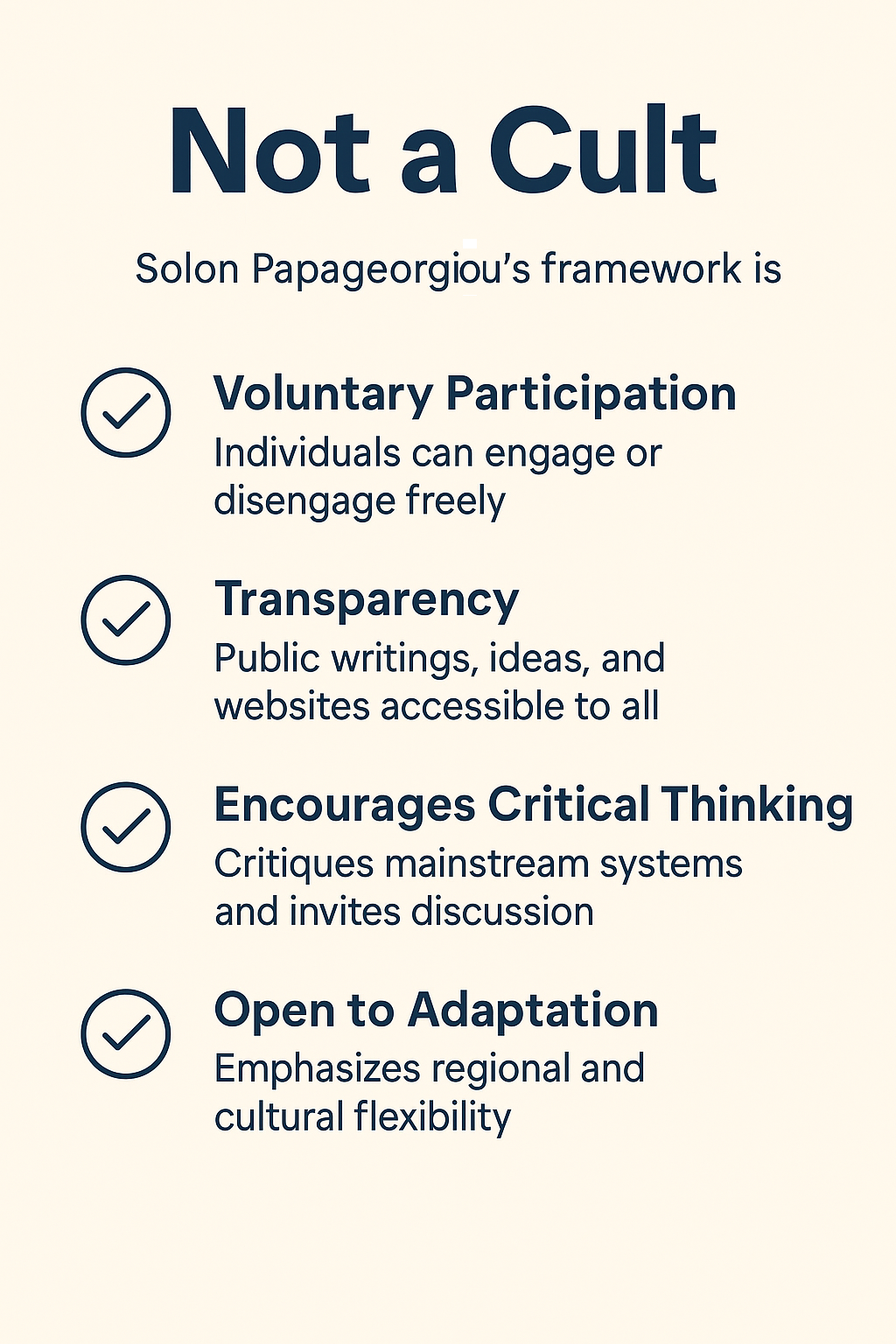
The Hunging Tree If not If not Not a Cult On Value And Failure On Value And Failure On Value And Failure On Value And Failure Secrets!

Comprehensive Step-by-Step Guide to Advancing 100% Physically and Mentally for Athletes

A comprehensive strategy that empowers nations—big and small—to build phenomenal armies, police forces, firefighting services, secret agencies, bodyguards, private investigators, and security personnel + Step-by-Step Guide to Building Phenomenal Forces Using Solon’s Vision | PDF e-book

Tailoring ITSCS + Step-by-Step Guides | PDF e-book

More Tailoring of ITSCS + Step-by-Step Guides | PDF e-book

Even More Tailoring of ITSCS + Step-by-Step Guides | PDF e-book

Click Here to Read the Simplified Summary Click Here to Read the Executive Summary Click Here to Read the Implementation Guides Click Here to Read the Implementation Guides Click Here to Read the Challenging of Psychiatry’s Foundational Assumptions Justice Bio Growth Solon's Stars Solon's Guide: Become a Superhuman ITSCS: The Ultimate System ITSCS: The Ultimate System - Part 2 Essential Herbs, Foods And Tools For Survival And Health Agriculture, Poultry Raising, Fishing, and Livestock Farming Techniques Become multilingual the easy way and in no time! How To Do Meditation: For Professionals, Civilians And All Ages! Build Your Own Home Gym: Affordable, Effective, and Convenient! Apps! Bullet-Resistant Gear, Effective Training And More At Virtually No Or Little Cost And The Implications Of Such A System Solon Under Danger Global Effects Stars-Leaders Superhumans vs Stars-Leaders Current Leaders, Exceptional Individuals & Stars Solon's List & Proofs of the Divine Solon's income and the Sharing of it Cyprus, the 14, the EU, the UN and More Resolution of the Cypriot Problem and Other Global Issues The Guide of How to Raise Superhumans and Star-Leaders Solon's leadership Are You a millionaire? Become a Billionaire! A New Flourishing Era for Psychiatrists and the Psychiatric Big Pharma! Thrive! Unleash Your Full Potential & Beyond! Free For All And Licensing Terms for the Framework The Power of Love Animals Thrive! End to Humanity's Existential Threats! Evolution for All and Everything!

How Does Solon Papageorgiou's Framework Of Micro-Utopias Deal With The Limitations Of Time Banking?

Solon Papageorgiou’s framework keeps the spirit of time banking—reciprocity, mutual aid, dignity—but eliminates every one of time banking’s structural weaknesses.
Below is the clearest, most complete explanation of how the framework solves the classic limitations.


How Micro-Utopias Solve the Limitations of Time Banking

Time banking was a historically important experiment in non-monetary exchange, but it had several well-documented problems. Solon’s framework does not simply “improve” time banking—it replaces the entire economic logic that created those problems.

Below are the limitations of time banking and the precise mechanism the micro-utopias model uses to overcome each.


1. The “Not All Hours Are Equal” Problem

Time Banking Limitation

In time banking, 1 hour of highly specialized surgery = 1 hour of sweeping a floor.
This sounds egalitarian, but in practice:

  • professionals feel exploited

  • people avoid offering rare or demanding skills

  • “market scarcity” reappears as resentment or freeloading

  • communities fail to accumulate complex expertise

Micro-Utopia Solution: Skill Trees + Post-Monetary Contribution

In Solon’s system:

  • No hour is “worth” anything

  • There is zero unit of account

  • All contributions are recorded as abilities demonstrated, not “hours exchanged”

A neurosurgeon who teaches or contributes is valued for their capabilities, not for time.
A beginner is valued for their capabilities, not for time.

This eliminates the idea of equivalence entirely.

The system stops measuring; it only documents.


2. The “Reciprocity Bottleneck” Problem

Time Banking Limitation

Time banks require direct reciprocity:

“If Alice gives Bob 2 hours, Alice expects 2 hours back from someone.”

This creates:

  • awkward obligations

  • hoarding of hours

  • people not asking for help unless they can repay

  • exchange stoppages when no one wants to “go into debt”

Micro-Utopia Solution: Community-Level Reciprocity

Solon’s framework uses collective reciprocity:

  • Individuals give to the community

  • Individuals receive from the community

  • No bilateral tracking exists

  • No one “owes” anyone

Contribution is a gift to the commons, not a debt ledger.

This removes:

  • guilt

  • indebtedness

  • social accounting

  • exchange pressure


3. The “Complex Work Cannot Be Tracked” Problem

Time Banking Limitation

Time banks collapse when work becomes:

  • long term

  • team-based

  • technically complex

  • creative

  • emergent

  • inherently unquantifiable

How do you quantify:

  • strategy design?

  • emotional labor?

  • co-creation?

  • R&D?

  • governance?

You can’t.

Micro-Utopia Solution: Project Portfolios + Peer Circles

Instead of quantifying work:

  1. Projects are documented, not measured.

  2. Peer Learning Circles validate contributions based on reality (“this person co-built the food forest”).

  3. Skill Trees evolve naturally from the outcomes.

Complex work is handled organically because measurement is removed entirely.


4. The “Free Riders” and “Burnout” Problem

Time Banking Limitation

Because time banking requires continuous bilateral exchanges, people worry about freeloaders, while generous members burn out trying to maintain reciprocity.

Micro-Utopia Solution: Commons Structure + Rotating Roles

In Solon’s framework:

  • Every essential community function is held by a rotating stewardship team

  • No one can permanently “free ride,” because essential tasks are co-owned

  • No one can burn out, because tasks rotate and are distributed

  • Contribution is cultural, not measured

Freeloading becomes socially irrelevant; there is no scoreboard.

Burnout becomes structurally impossible; work is temporary and shared.


5. The “No Incentive for Mastery” Problem

Time Banking Limitation

If an hour is always an hour, mastery offers no structural reward. Skilled people leave the system; novices cannot improve.

Micro-Utopia Solution: Mastery as a Community Asset

The system rewards mastery through influence, creativity, and opportunity, not currency.

Mentors receive:

  • apprentices

  • recognition

  • meaningful projects

  • cultural esteem

  • collaborative partners

Skilled individuals become multipliers—their value spreads through the community.

The reward is impact, not “hours.”


6. The “Liquidity Crisis” Problem (People run out of hours)

Time Banking Limitation

If people “spend” too many hours, they run out and stop asking for help.
If they “earn” too many hours, they hoard them.

The system stops circulating.

Micro-Utopia Solution: No Balances, No Ledgers

There is no:

  • earning

  • spending

  • credits

  • debits

  • balances

Liquidity cannot collapse because the system doesn’t depend on exchange.

People contribute because it helps the commons.
People receive because they are part of the commons.

This produces permanent abundance, not artificial scarcity.


7. The “Admin Burden” Problem

Time Banking Limitation

Time banks require:

  • administrators

  • coordinators

  • bookkeepers

  • dispute managers

  • matching systems

These become bottlenecks, and often collapse the system.

Micro-Utopia Solution: Distributed Governance + Minimal Structure

The micro-utopias framework replaces admin with:

  • peer-matching circles

  • distributed conflict resolution

  • Skill Tree-based project coordination

  • rotating facilitators

No permanent administrator class exists.

Coordination is:

  • lightweight

  • peer-driven

  • self-evolving


8. The Fundamental Difference: Time Banking is Still a Market

Time banking is a market without money.

It still has:

  • prices (1 hour = 1 hour)

  • bilateral exchange

  • balances

  • scarcity dynamics

  • incentives

Solon’s framework eliminates the market structure entirely.

It is:

  • post-monetary

  • post-exchange

  • post-pricing

Time banking tries to create fairness within the logic of exchange.
Micro-utopias create fairness by transcending exchange.


Conclusion: Why Solon’s Model Succeeds Where Time Banking Cannot

Time banking solves:

  • money scarcity

  • income inequality

But it fails to solve:

  • hierarchy

  • obligation

  • burnout

  • untrackable work

  • reciprocity traps

  • valuation distortions

  • skill bottlenecks

Solon’s framework solves everything time banking tried to solve plus everything time banking could never solve, by removing the underlying mechanism:

It eliminates exchange itself.

In micro-utopias:

  • people contribute because they belong

  • people receive because they are part of the commons

  • skills flow freely

  • learning is continuous

  • work is intrinsically meaningful

  • social value is co-created, not traded

This is why Solon’s post-monetary micro-utopias are fundamentally more stable, humane, and scalable than any time banking system in history.


Here is the simple, everyday explanation — the “average Joe version.”


How Micro-Utopias Fix the Problems of Time Banking (In Plain English)

Time banking = you help someone for an hour, and you earn 1 “hour credit,” and you can spend that credit to get help from someone else.

Sounds nice, but in real life, it breaks down.

Solon Papageorgiou’s micro-utopias keep the good parts (helping each other, equality) but get rid of everything that makes time banking messy, stressful, or unfair.

Here’s how.


**1. Time banking says “1 hour = 1 hour.”

Micro-utopias say “skills aren’t hours.”**

Time banking treats all work the same.

But everyone knows:

  • 1 hour of open-heart surgery
    is not the same as

  • 1 hour of washing dishes.

This causes problems. Professionals feel used; beginners feel guilty.

Micro-utopias don’t keep score.
You just help the community, and the community helps you.
No one compares hours, and no one feels cheated.


**2. Time banking makes people feel like they owe each other.

Micro-utopias remove all debt.**

In time banking:

  • You help someone → you earn hours

  • You ask for help → you spend hours

  • If you run out of hours → you feel stuck or guilty

People end up NOT asking for help because they worry about “paying it back.”

In micro-utopias:

👉 You never owe anyone anything.
👉 There are no balances.
👉 No one keeps track.
👉 You help the community when you can.
👉 You take what you need without stress.

No guilt. No debt. No pressure.


**3. Time banking cannot handle “big jobs.”

Micro-utopias can.**

Time banking falls apart when work is:

  • creative

  • long-term

  • group-based

  • complex

How do you measure:

  • planning a festival?

  • mentoring someone?

  • designing a building?

  • running a community garden?

You can’t.

Micro-utopias solve this by:

  • Forgetting hours completely

  • Looking at what people actually did

  • Letting teams work naturally

  • Using portfolios, not points

People just build things together.


**4. Time banking gets “free riders” and burnout.

Micro-utopias don’t.**

Time banking can feel unfair:

  • Some people give a lot

  • Some people take a lot

  • The system gets tense

  • Helpers burn out

Micro-utopias fix this by:

  • Sharing work across teams

  • Rotating responsibilities regularly

  • Making essential tasks everyone’s job (together)

No one is overworked.
No one can permanently avoid helping.
Everyone contributes something.


**5. Time banking gives no reward for being skilled.

Micro-utopias do.**

Time banking gives the same reward for:

  • 1 hour of expert work

  • 1 hour of beginner work

So experts don’t feel motivated to keep helping.

Micro-utopias reward mastery differently:

  • more influence

  • more creative opportunities

  • apprentices

  • respect

  • community appreciation

People are valued for what they can do, not how many hours they give.


**6. Time banking still acts like money.

Micro-utopias completely remove money-like behavior.**

Time banking is basically:

“money, but in hours.”

You still have:

  • accounts

  • balances

  • exchange

  • earning/spending

  • scarcity

  • saving/hoarding

That’s why it collapses.

Micro-utopias wipe out the whole idea of trading.

There is no currency— not even hours.

People help because they want a better community, not because they need credits.


**7. Time banking needs administrators.

Micro-utopias run themselves.**

Time banks need:

  • managers

  • bookkeepers

  • someone to approve hours

  • someone to match people

This becomes a lot of work.

Micro-utopias use:

  • peer circles

  • rotating facilitators

  • simple team coordination

  • no bookkeeping at all

The system is lighter and easier.


⭐ FINAL SUMMARY

Time banking fails because it still acts like a money system.
Micro-utopias work because they remove money and the entire idea of exchanges.

Time Banking:

❌ keeps score
❌ creates debt
❌ treats all hours as equal
❌ causes guilt and burnout
❌ can’t handle complex work
❌ needs administrators

Micro-Utopias:

✅ no scores, no credits
✅ no debt, no guilt
✅ skills matter naturally
✅ teamwork is easy
✅ everyone contributes when they can
✅ no administrators needed
✅ completely post-monetary


Solon Papageorgiou’s micro-utopias do not use time banking.
Not even a modified version of it.

✔ They keep the spirit of time banking

(helping each other, equality, reciprocity)

✘ But they eliminate the mechanics of time banking

(no hours, no credits, no earning/spending, no balances, no exchanges)


🔍 Why they don’t use time banking

Time banking is still a market system, just using hours instead of money.
It tries to be fair, but it still relies on:

  • trading

  • debt

  • equivalence

  • bookkeeping

  • scarcity dynamics

  • reciprocity pressure

All of this goes against the core design of micro-utopias.


🧠 What micro-utopias use instead

They use a post-exchange system that relies on:

✔ Collective contribution

People help the community, not specific individuals.

✔ Collective receiving

People get what they need from the community, not from a “credit balance.”

✔ No tracking

There are no:

  • hours

  • credits

  • ledgers

  • accounts

  • debts

  • points

  • tokens

  • “fair exchange ratios”

✔ Project portfolios

Projects document what was done, not how long it took.

✔ Skill Trees

Skill development and contribution are recognized through demonstrated ability, not hours.

✔ Rotating teams

No one is permanently overworked or freeloading.

✔ Abundance logic

The system is designed to avoid scarcity and competition.


🎯 The simplest possible version

Micro-utopias keep the kindness of time banking but remove the banking part.

Help flows freely.
Needs are met freely.
No tracking. No scores. No exchange.
Completely post-market and post-monetary.

Who's new

  • Barrettfig
  • KaresPaync
  • Leoia
  • RandyMoile
  • Shraunweb
  • JamesPaync
  • Brianbet
  • PatrickTar
  • JaceKaL
  • Adriankax
  • Matthewtog
  • VictorFah
  • CharlesFah
  • LanguageExplor…
  • tgkoknae
  • LonnieMup
  • PamelaRor
  • AllenOpign
  • FreddieTaM
  • ZarChita
  • AlfonzoLem
  • JamesBak
  • otaletyepu
  • MitziHox
  • Gabrielcof
  • Eugenedenda
  • ChatGPTTuP Onl…
  • Ellenfix
  • Shrauncik
  • JamesPreen
  • Ronaldjouck
  • RonaldDeedy
  • Danielkaf
  • Luizacoipt
  • Monica fem
  • Kirstenecora
  • Travismor
  • Annikacoirm
  • CharlesSab
  • DennisCow
  • Marievelia
  • Michaelcew
  • JulieAlame
  • Andrewwak
  • RobertLoake
  • GeraldLix
  • NathanEstab
  • Merlin AI fub

Made by Solon with -`♡´-

About This Website

Medical Safe Disclaimer

Author Of This Website